Please contact us using the form below if you have any comments regarding the information on this website, or have any additional information to contribute.


Steve Palyga, Alf’s grandson, tells the following story.
Whenever asked whether he would like a wine or spirits, Alf always said, “no thanks, I’m just a Pelvian beer drinker”. This puzzled me, but, as with everybody else, I never asked Alf what he meant.
Years after he died, out of nowhere, it dawned on me – he meant to say, “I’m just a Plebeian beer drinker”. How Alf had confused himself, or if he even was, I could never work out.
Whenever Alf travelled, he dropped in on anybody he knew along the way. In his book Family Ties, Tom Moore called it his “custom of visiting people uninvited”.
Alf had read that Hollywood star Anne Baxter46 had married Randolph Galt, a wealthy American who owned “Giro”, a 42,000 acre cattle station near Gloucester47 (50 kilometres west of Taree). Shortly prior, Baxter had visited Australia to film Summer of the Seventeenth Doll. The newly married couple had come to live at Giro. On one of his trips, Alf decided to drive 100 miles out of his way to drop in on Anne Baxter.
Alf said that she made him welcome, and that they had a great catch up, even though he was a perfect stranger. Probably, she was just being polite, although, living on an isolated property, she may have welcomed the fan’s attention. Alf often told the story, no doubt luxuriating in the reflected glory of having had a “catch up” with an A-list celebrity and genuine Hollywood movie star of the time.
There was no doubt that Alf had tickets on himself. And he liked to talk. He could go on a bit with his yarns, mostly about his own exploits. But he was not a bore, what he said was interesting. You didn’t get the exhaustion, and desire to escape, which comes from listening to a windbag.
A favourite family story is told by Alf’s grandson, Andy Guidera. Andy visited Alf and Dot at their home in Port Noarlunga sometime in the 1980s. Dot was doing some knitting, and Alf was talking to Andy, going through photos and, as usual, regaling Andy with “stories of Alf”. After a time, and when Alf paused ever so slightly, Dot broke in and said: “Andy, you know your grandfather likes to talk a lot, don’t you? … And do you know what your grandfather likes to talk about most, Andy? Alfred Charles Shields!”
Alf looked wounded, but only for an instant. He quickly recovered his sunny nature, and started talking again – about himself!
Wherever he went on his travels, Alf would often call up the local radio station or newspaper, and offer to be interviewed. On his 1953 world tour, he was interviewed by the BBC for a quarter-hour on the different aspects of Australian, American and English speedway. His papers included articles from the Barrier Daily Truth (19th June 1949), the Bristol Evening Post (10th May 1953), the Gold Coast Bulletin (20th July 1956 and 29th November 1963), the Alice Springs Star (22nd May 1984), etc.
The Bristol story starts out: “Had a call today from a man …” The article also noted that Alf was “a man who confesses ‘I love talking about myself’”.
He told the Alice Springs Star: “I don’t drink. I don’t smoke. And I don’t like women … And I’m a bloody liar!”
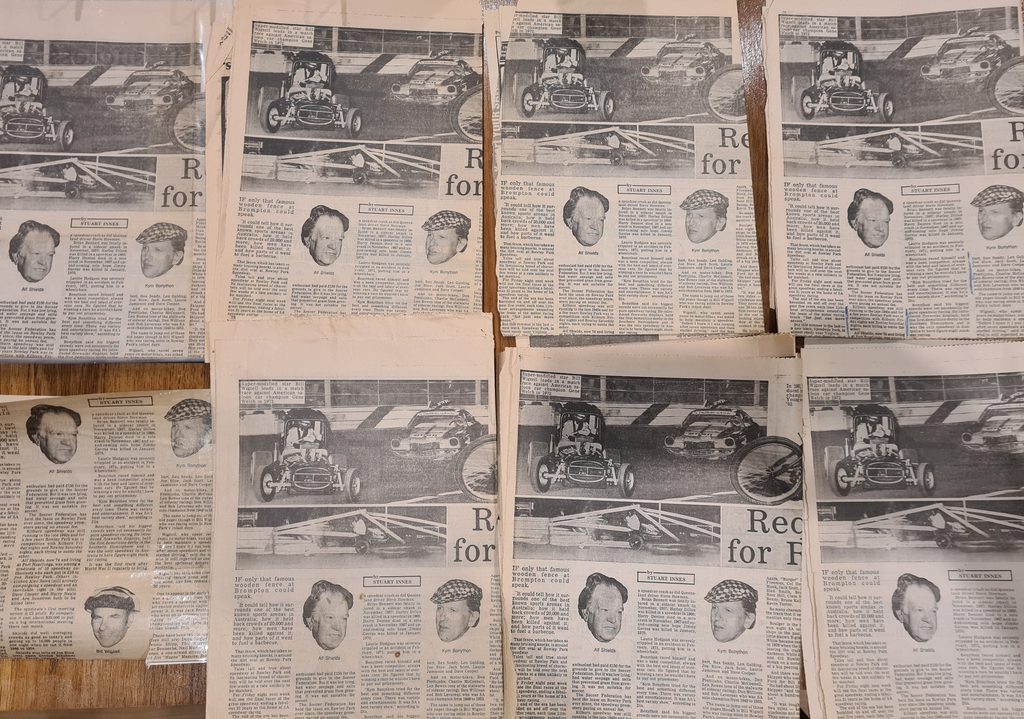
The Advertiser, Adelaide’s daily newspaper, ran a story about Rowley Park speedway when it closed in 1979. Alf was interviewed and photographed for the story. When he died, 8 copies of the story were found in his papers. You never know when you might need one to hand out to an admirer!
Alf liked to say: “Everyone should be allowed to have their proud boast.”

“Sale of the Century” was a very successful and very well known game show that aired on TV throughout the 1980s and 1990s.44 Tony Barber was the initial host for over a decade, and also quite a celebrity of the day.
Alf applied to go on to the show several times, stating in one of his applications: “One of my ambitions is to appear on the program”.
He was given auditions in July 1983, and again in 1985, and wrote to the showrunners (the Grundy Organisation) on two other occasions (June 1984, and about 1986) reminding them of his audition scores (31/50 in 1983 and 27/50 in 1985) and asking if he had been forgotten, and needed to be re-auditioned. They replied in each case that he need not re-audition, because all those auditioned remained for consideration to go on the show. He was told some people had waited 4 years to get on.
Dot wrote the application letters for him. They include such lines as –
Sure packed a lot into my eighty years.
[He obviously thought twice about that boast, as the word “often” was then added before “have”].
Alf never made it onto the show.
[Alf] built a special trailer to carry his midget car [SA 8] and barnstormed all over Australia, still chasing the sun, and competing at interstate speedways. [Alf recorded elsewhere that he raced at Sydney, Windsor, Toowoomba, Brisbane and Rockhampton, where he raced for the last time].
In his last year of speedway racing the young veteran was placed second in the First Australian Hotrod Championship, a thrilling race in which only seven cars from a field of twenty crossed the finishing line.
Thus, in 1954, he came to the Gold Coast via Toowoomba and Brisbane where he had competed with some success. Alf repeated the trip in 1956, and on that visit he bought a home at Broadbeach.
Also he bought a mini-bus, “hung up his helmet”, and commenced operations as a charter driver on local tours.
A good raconteur, Alf Shields spiced his descriptions of local landmarks with stories of other people, and many places. And long before “I’ve Been Everywhere” took a young Australian vocalist40 to Las Vegas and neon lights, Alf Shields was dubbed by his mini-bus passengers, and Gold Coasters, as the man who’s been everywhere – or knows someone who has. …
Alf Shields managed several service stations; operated a picture show; served as an aircraft engineer; sold war surplus equipment; owned a furniture store; grazed cattle; shot buffalo and kangaroos; controlled a capital city speedway; built his own speedcars and raced against champions; pioneered mini bus tours; and finally settled for a fun parlour on the Gold Coast.
| 40 | Lucky Starr, see https://en.wikipedia.org/wiki/Lucky_Starr_(singer), also https://en.wikipedia.org/wiki/I%27ve_Been_Everywhere. |
Just after the finish of our first racing season, I was very surprised when a Supreme Court Writ was served by a bailiff.
My only legal dealings up to then had been a 25/– fine in Sydney for an unregistered motor bike35 (hell, half a week’s wages in 1925), and for drawing up the legal paperwork to set up Rowley Park Speedway Co. Ltd.
When the second season began, we took every precaution to minimise the complaints in the Writ. I shifted the loudspeakers so they were directed along the crowd, instead of at them and out onto Torrens Road, cut out the records played between events, and limited announcements to starters and results.
I placed the grader and truck on the track at the end of the programme to stop the occasional yahoos who stayed behind for a good session at the barbeque, then took their road cars onto the track at 2 or 3 in the morning to prove they were better than Jack Brabham.
The season had finished when the Court case was heard. After a 3½ day hearing, we won the case subject to putting mufflers on all cars and bikes.
The hearing costs were expensive: 300 guineas,36 win, lose or draw to Kevin Ward, top K.C. With the solicitor’s costs and witness expenses,37 it totalled £1,000. There had been four Plaintiffs, but lucky for one, as he dropped out. The Judge was Sir Mellis Napier, Chief Justice, Lieutenant Governor, top brass.
| 35 | In another interview, Alf said the fine was for a noisy motor bike. |
| 36 | A guinea was £1 and one shilling. |
| 37 | Alf called the Mayor and an Alderman from the local council, as well as 5 elderly ladies living nearby who said they enjoyed the speedway meetings, and the noise was no worse than on the street, or when the site operated as a brickworks. One suspects such local resident witnesses would be difficult to find these days. |
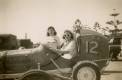
During the Kilburn era, cars were built by Sam Bright, Gordon Haverland, Jack Horley and Harley Hammond, not a sufficient number to make a good programme. I bought Jack Horley’s car complete, plus two incomplete ones, which I arranged to be finished. Rick Harvey drove my SA12, and I leased the other three to various drivers so I could devote my time to building the speedway and promotion.
They had Ford A engines, with drilled crankshafts for full oil pressure, down-draft carburettors, large induction manifolds, larger valves, hot camshafts, and a sandwich-type aluminium cylinder head which raised the compression ratio. I had a pattern specifically made for this head, and sold a number of them to other car owners in Adelaide and interstate. A good lusty Ford A remained very competitive for quite a while.
Speedway did not rate highly with the two daily newspapers in Adelaide at that time, however, by taking them quite a lot of copy, and getting press photographers down to see the various improvements at the track, we had quite a lot of publicity for the grand opening of the “new” Rowley Park Speedway.
Two neon signs were arranged, one with “Speedway” flashing on the Torrens Road frontage, and the second on Port Road pointing up Coglin Street, with the word SPEEDWAY and a flashing arrow.
A quarter-hour segment called Rowley Park News was arranged with Radio Station 5KA every Thursday preceding the news. I would take my star performer for the Friday night into the studio and tape an interview. I taped interviews with Jack Young, the current World Solo Champion at that time, Frank (Satan) Brewer, Stud Beasley, Aub Lawson and Fay Taylour, all interesting interviews.
The Butcher’s Picnic [the final feature race of the night, usually 10 laps, and with no restrictions on car types or engine sizes], fireworks and charity nights were always popular. In his time, Dad was averaging good crowds and getting up to 14,000 people attending in one night. Kath remembers how focused he was on regaining the public’s interest in motor sport in Adelaide. Josie remembers the weekly program meetings held in our home, and the official’s stand which was built at the speedway so that she could observe and report on the results of each race.

Some well known drivers such as Jack Brabham, N.S.W. champ who was later knighted, Frank (Satan) Brewer, Bob Playfair – 1949 world speedcar champion – and the vivacious Irish driver Fay Taylour competed during dad’s term as promoter. He invited US Davis Cup team members Trabert and Seixas, as well as Australians Hartwig and Rose, to be spectators to raise publicity.31
| 31 | The David Cup final for 1952 was played at Memorial Drive Park in Adelaide from 29th to 31st December 1952. See https://en.wikipedia.org/wiki/1952_Davis_Cup. |

Ten of us put in £10 each and ran a meeting quite profitably and that finished the [1950-1951] season.
The S.A. Railways, whose ground Kilburn was on, wanted it back. I negotiated with the Enfield Council and bought the fence, kiosk, turnstiles, pit fence, etc. I also bought a 3-ton Ford Truck and the elements of Rowley Park from the previous promoter. I transported all the gear to Rowley Park and during the winter built one good speedway out of two.
The lease [by this time, Alf had signed a 3 year lease with the Soccer Association] was for a flat figure of £26 for each of 23 nights, plus one penny per adult through the turnstile. Amusement tax was still in operation at 20% so if I had 5,000 customers, one thousand pounds30 was paid to Mr Chifley, the Federal Treasurer. My admission price was 2/6, and 6d for a programme.
| 30 | He meant 1,000 admission fees. If 5,000 adults paid 2/6 each, a total of £625, the 20% tax would be £125. |
In the late 1940s, Alf used to go to Darwin for the post-war Army Disposals, and buy vehicles he could recondition, or other stuff he could make money out of. One year he went up with a friend who was a member of the Royal Antediluvian Order of Buffaloes.23 The friend went to a Buffs’ meeting in Parap. Alf takes up the story:
“I waited outside, and could hear merriment, so I decided to go in. Back in Adelaide, I joined the Lodge based at Kings Ballroom on King William Road.24 When we moved to Queensland, I transferred to Grand Lodge of England No. 561 as a Brother-Primo, one who conducts meetings. After a period, Knighthood followed, and I was called “Sir”. Eventually, I was Chain Collarman, then the Right Honourable Sir Alfred Shields.”
The Buffs were known as the “Boozy Buffs”, a label highlighting the casual, drinking-club nature of its meetings compared to other secret fraternities, and notwithstanding its charitable fundraising objects. Mateship and male fellowship over a few beers – no wonder Alf couldn’t resist going in.
| 23 | See https://en.wikipedia.org/wiki/Royal_Antediluvian_Order_of_Buffaloes. |
| 24 | Actually at 318-320 King William Street, Adelaide. It is heritage listed, and now converted to offices. See https://en.wikipedia.org/wiki/King_William_Street,_Adelaide. |
As sidelines to his war job, Alf Shields conducted a newsagency, first at Glenferrie, later at St. Kilda; and much nearer to his base at the airport, a library at Coburg. Released by Manpower in 1945, Alf flew to Adelaide, where he acquired a furniture business at Hindmarsh; disposed of the newsagency at St. Kilda; retained the library; gathered his family unto him in South Australia; and spent four weeks lazing on the beach.
Most of the first Midget drivers were old Speedway bikies like myself, who had raced bikes on the asphalt, board, dirt and concrete tracks of the early 1920s in Sydney. That’s why nearly all the original Midgets had Harley, Indian or Douglas air-cooled twins, and were very agricultural.
In Sydney, when my Club [the N.S.W. Midget Association] got going, the midgets only got the last race at the Showground when most of the crowd were streaming out. One mate had a Harley complete with gearbox and petrol tank in front of him, and behind was a Ford Model T diff with a chain sprocket fitted in place of the crown wheel. The chain went in and out of a hole in the diff and ran between his legs. Everything was bolted up solid, no springs, so it was a rough ride, sure enough.
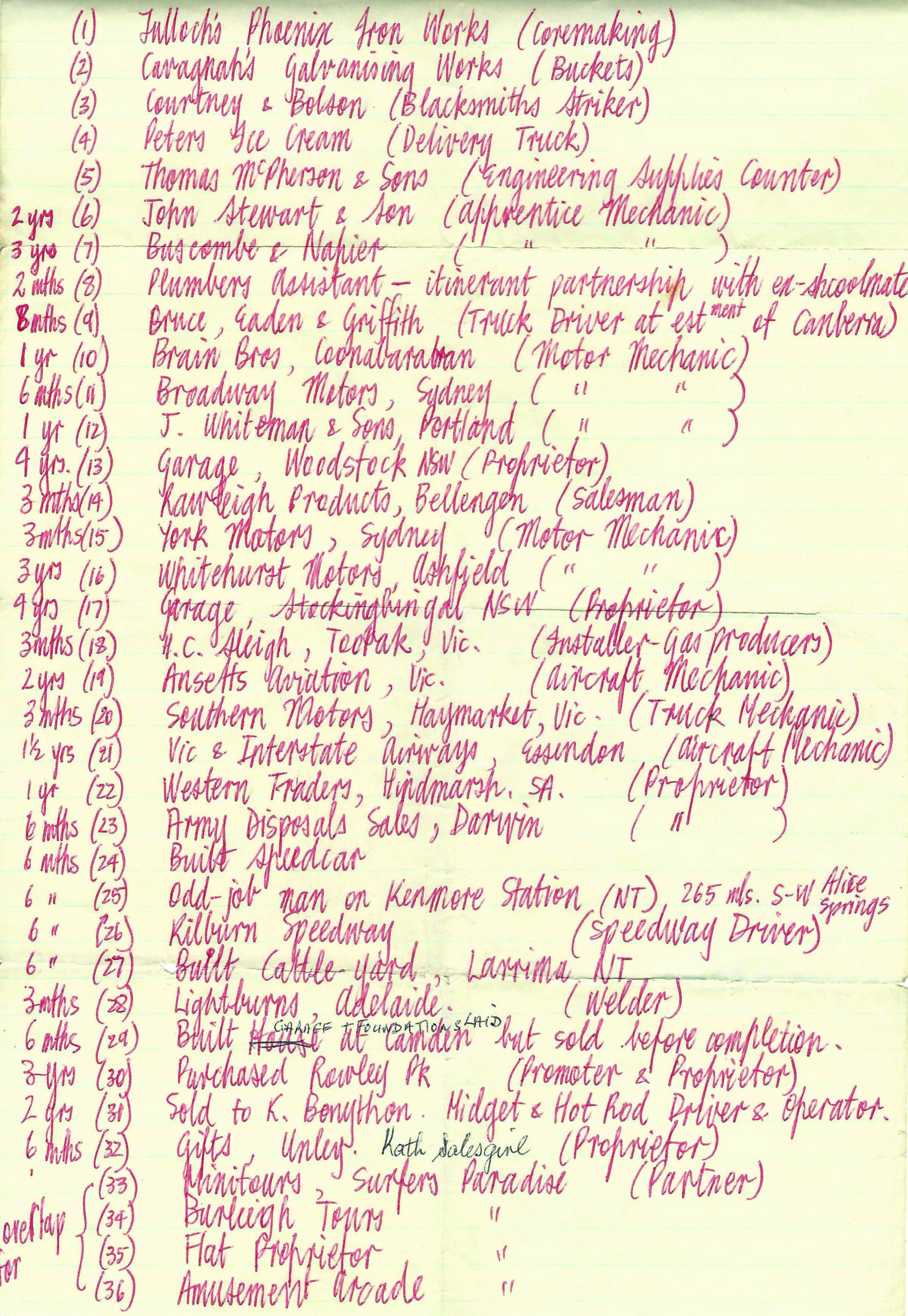
Alf often spoke of how many jobs, occupations and businesses he had had. He sat down with his grandson Steve Palyga in the 1970s and they made a list.
Alf missed some activities, like his stint shooting buffalo and kangaroo for skins in the Northern Territory in the late 1940s, a cattle grazing venture, his ownership and leasing of four midget race cars in the early 1950s, a business selling patterned cylinder heads, and the site construction works he did in the early 1960s for his and Dot’s new home in Burleigh Heads.
That fact, and the list, near enough proves Alf’s oft-repeated statement that he had been involved in more than 40 businesses. Alf was given to boasting, but it was never idle boasting.

I won a race at Maroubra Speedway,13 a ⅝ of a mile death trap. It had a red line painted around the track and you had to be doing 80 m.p.h. to cross it. The last 12 feet of [banking at] the corners was vertical – a straight out Wall of Death.
The cars and bikes were stretched and tuned to the maximum, blow ups were often and spectacular, barbed wire protective clothing was a must as concrete is awful hard. Bill Conoulty, the top Douglas rider, was a little guy who wore thick underpants, tight horse-riding pants, padding in the right places, then racing leathers. He looked a real muscle man. The Douglas seized up solid and Conoulty shot forward, sitting upright on his backside. When he stopped sliding, he was down to the bare essentials.
The Sydney Showground Track started in the early Twenties.14 On the first night there, over half of the competitors were Newtown Motorcycle Club members. That first season there was no limit on capacity, so the bikes ranged from small two strokes to 10/12 Harleys.
By the second season, future champions started to emerge, and good riders received sponsorship from the motorcycle trade. Tommy Benstead with Harley from Bennett & Wood, the Datson Brothers of Newcastle from Douglas, Jack Sidebottom from P.&. R. Williams, Billy Lamont etc. By the third season, the dirt track Douglas and the “Peashooter” Harley, the valve surge15 etc. were the way to go, but as I was an apprentice still, this was beyond me in money as well as skill.
| 13 | 70,000 attended the opening meeting of the Olympia Motor Speedway at Maroubra in December 1925, see https://trove.nla.gov.au/newspaper/page/20632073. For further information on the speedway, see http://www.vintagespeedway.com/maroubra.html. One of that article’s first images shows the features Alf refers to: the steepness of the banking at the top of the concrete bowl, and the line in the middle of the track beyond which 80mph was required to stay upright. Alf’s description of the speedway as a death trap is correct – the article lists five deaths in the first 15 months of operation. |
| 14 | Actually July 1926, see https://trove.nla.gov.au/newspaper/article/128103753 and https://trove.nla.gov.au/newspaper/article/246347152. See also https://en.wikipedia.org/wiki/Sydney_Showground_Speedway. |
| 15 | Alf appears to be referring to modifying to stiffer valve springs. Valve spring surge, a vibration caused by the natural frequency of the spring as it is cycled, occurs if the rider repeatedly twists the engine to excessively high RPM. See https://motorstate.com/valve-spring-basics/ and https://www.tildentechnologies.com/Cams/Take-Surge.html. |
My friend with the Henderson motorcycle still worked there, and he made extra money by fitting electric lights and power points in old houses at night and on weekends. The price was 35/– for lights and £2/10/– for power points. After a few months I started out on my own, using his licence. He sure was a good mate.
I soon bought my first motorbike, the first of many, an Indian Powerplus 6/8.9 With the blue metal roads in Sydney and the network of tram rails that used to stick up about 2” in places, I seemed to spend more time on my ear and elbows than on the saddle.
For 5 years I never had an unpatched pair of pants. I remember going into town one pay night and buying a new pair of sports trousers for £1/5/–. They never made it home in one piece, holes on the knee and backside as usual.
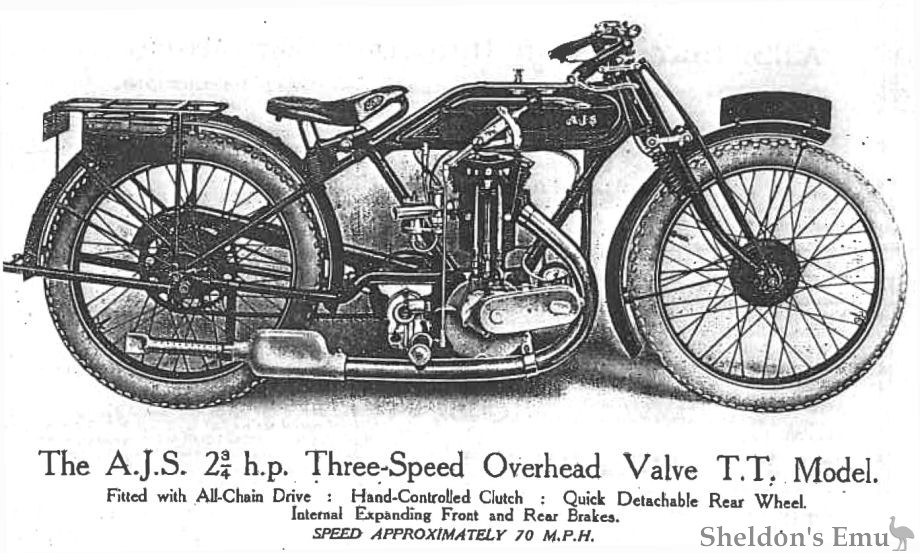
I later joined the Newtown Motor Cycle Club, and purchased an A.J.S. 2¾ hp T.T. replica for £105, paying it off at 25/– per week. Thank God for old houses that needed lights and power connected.
The Club had various activity days including hill climbs, one mile acceleration tests, slow races,10 reverse gear 10/12 Harley races,11 flag rally races,12 and so on.
| 9 | According to Google AI Overview, 5/7 standardly indicates a capacity of 750cc, 6/8 standardly indicates a capacity of 800cc, and 10/12 standardly indicates a capacity of 1200cc. |
| 10 | Apparently a reference to races where the last one to cross the finish line without putting a foot down wins, the object being to go as slow as possible but still stay balanced. |
| 11 | Referring to racing in reverse, making it tricky to stay in a straight line at speed. Apparently, a Harley 1200cc bike (aka the “10/12”) of the time had a reverse gear. |
| 12 | Possibly a reference to a race where riders tackle the course one by one, and the quickest time wins, although that would already by then be called a time trial. Possibly also a reference to a race where competitors circulate but racing only starts when the flag drops, or where the competitors run to their bikes once the flag drops, or where you need to cross the finish line once the flag drops (and can thus lose even if leading by laps), consistency and reliability being just as important in rallying as outright speed. |

I did about two weeks work at Courtney & Boulson, big spring makers and that in Ultimo. I was blacksmith striking, using a dirty, big 14 pound sledgehammer, and, boy-oh-boy, that was hard work. I knew nothing about striking, and the art of it, which was what they called “bumping”. The blacksmith shifts the red metal onto the anvil, and where he hits it with the little hammer, you’re supposed to hit it with the big hammer. But I wasn’t given any instruction, I was just big and brawny, and took the hammer job on.
The big Scots blacksmith, after being aggravated I suppose by me not hitting where he was bumping, he pulled the hot metal from the anvil as the big hammer came down and, of course, when you hit the bare anvil the hammer bounces back in a big way, and he let out a Scots roar, “Here it were!”
And that became a running theme with us, Jack Moore and my mates, “HERE IT WERE!”
Grandma Shields gave Alf sixpence to go and get some messages from the shop.7 It was winter and, on the way, Alf was jumping over and back across water running down an open gutter. In doing so, he lost the sixpence. “I was standing there blubbering on the side of the water, and looking around for it, when a bloke came along and said, “what’s up, son?” I said, “I’ve lost me shilling for the messages”, and the bloke gave me a shilling. I bought the messages, and went home and put them down with the sixpence change. I still got a belting, not for losing the sixpence, but for taking money off strange men.”
Alf’s mother’s father, Grandpa Noblet, had a home that was “a haven for kids. I used to go up after Mass every Sunday pretty well. It had books, models of ships, Uncle Fred’s 32-calibre rifle, a swing in a loquat tree and a flagpole, and books and books and books. I remember reading The Swiss Family Robinson, and turning straight over and starting to read it again. I didn’t know for years that Grandma Noblet wasn’t my mother’s mother, kid-like I never bothered to work that out.”
Alf recounted how during school holidays he helped his father deliver timber with a horse and cart for the Federal Timber Company in Rozelle.8 They delivered to building sites, including to Taronga Park Zoo, which was then under construction. This delivery was a “bit of a candle in a bottle trip. We’d get back home at about nine o’clock at night. With the horse doing about four mile an hour, it was a long haul from Rozelle to Taronga Park and back, and there was no Sydney Harbour Bridge. We used to go across on the punt.”
Alf acknowledged that, as he grew up, he “got a bit obstreperous. I only got about four or five beltings in my life. Dad had a dirty, big piece of cartrace underneath the bed, and he didn’t use it often, but when he did, he made a fair job of it. So one day, I burnt it, and said to myself ‘that’ll fix it’, but I made a bad blue there, because there was a bigger and better one underneath the bed in no time.”
| 7 | In the early 20th century, private shopkeepers acted as official postal and telegraph agents in suburban areas. Hence, you paid a fee (often 3d to 6d) to pick up telegraph messages at your local corner store. |
| 8 | See https://trove.nla.gov.au/newspaper/article/102798354. |
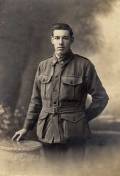
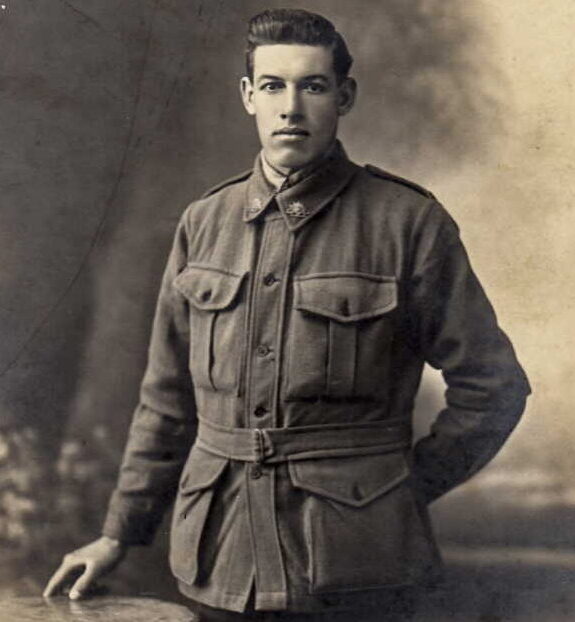
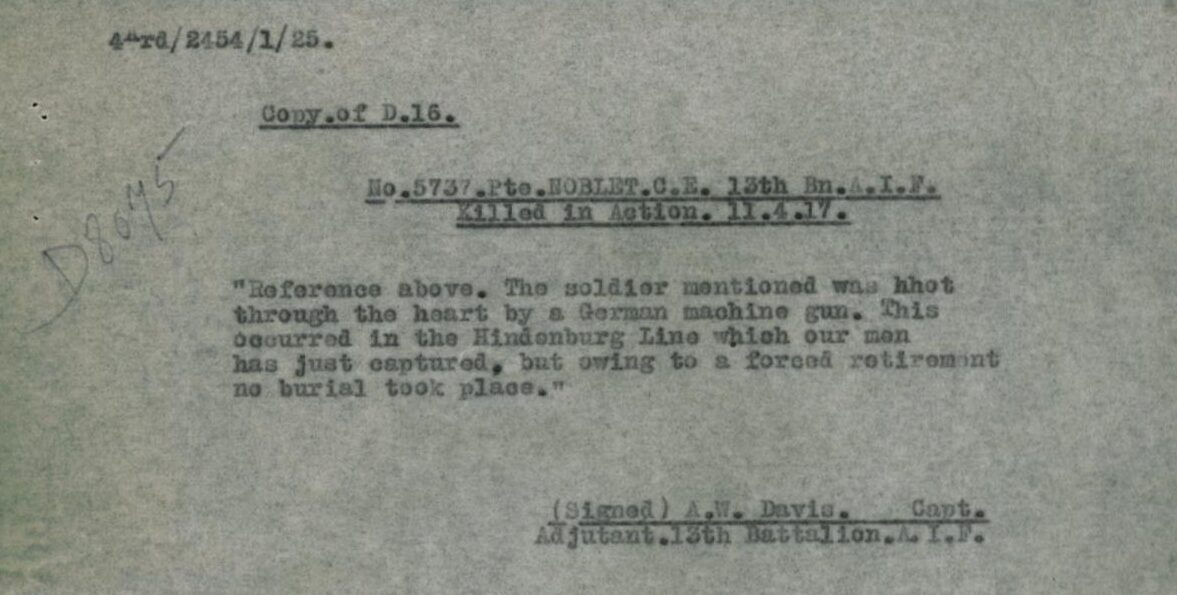
The casualty report by the Battalion’s Adjutant below stated that Charlie had been shot through the heart by a German machine-gunner as his battalion was storming the Hindenburg line. Tom Moore takes up the story: “Subsequent Red Cross interviews of members of Charlie’s unit revealed some confusion over what happened to his body. Some concurred with the Adjutant but at least one believed that Charlie’s body had been removed for burial. In any event, Charles Emil Noblet died on a battlefield in France, just as his father had feared, and rests there with no known grave.”6 One witness told the Red Cross: “He was very popular with his mates.”
| 6 | Charlie’s war service records are at https://recordsearch.naa.gov.au/SearchNRetrieve/Interface/ViewImage.aspx?B=8002306. He is memorialised on the Australian National Memorial at Villers-Bretonneux, which has the names of more than 10,000 Australians who died in France during the First World War but have no known grave. |


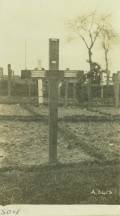
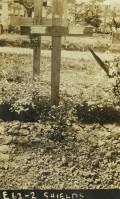
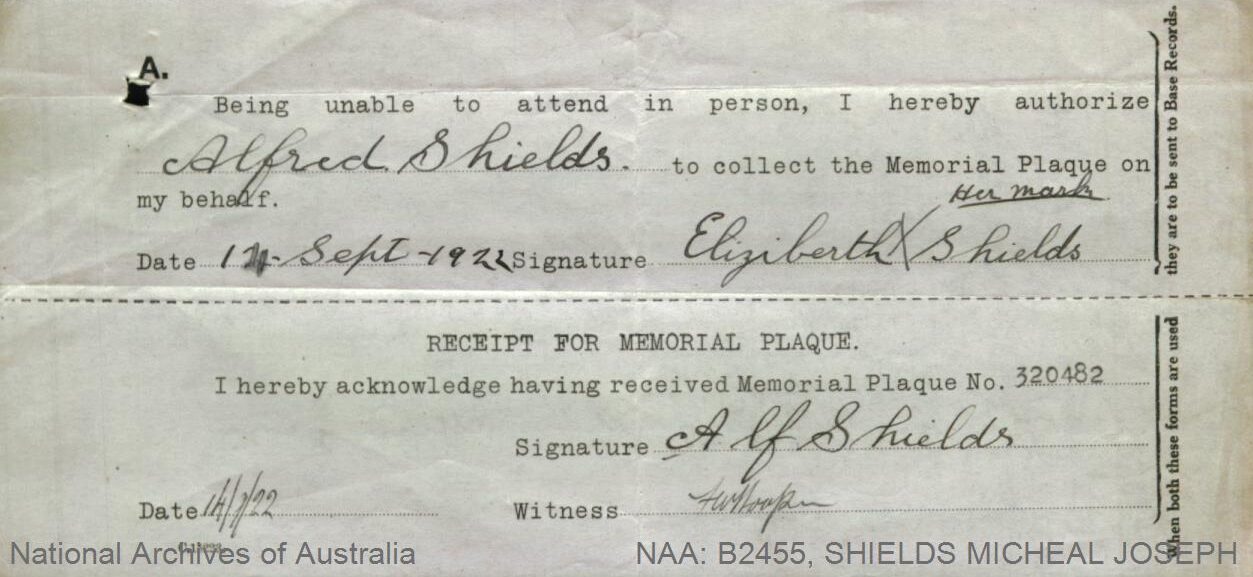
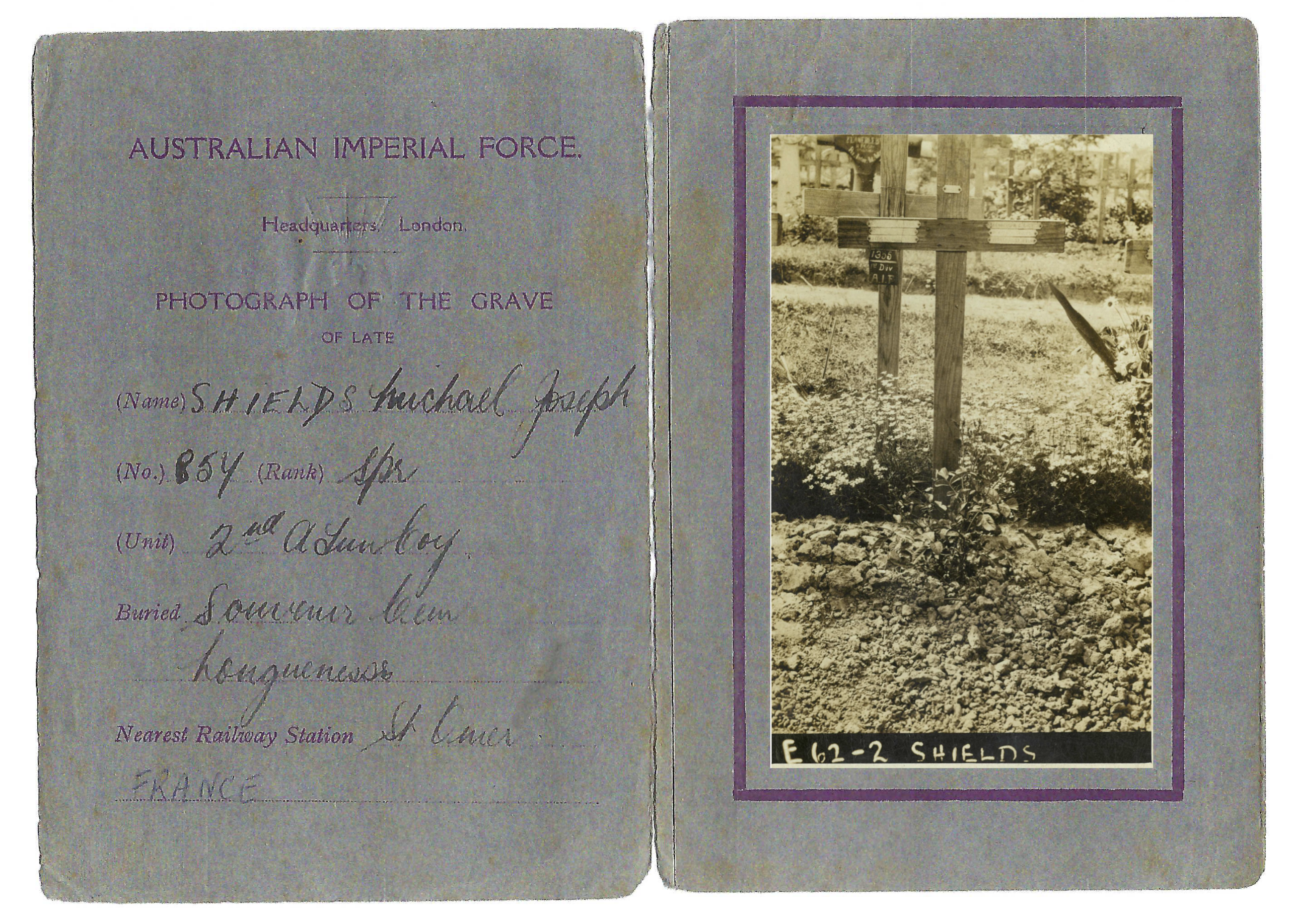
Mick had enlisted at the age of 39 in Perth in January 1916. Having been a miner in a past life, he was put in the Mining Corps, later the 2nd Company, Australian Tunnelling Corps. He was sent to the Western Front, where he suffered a gunshot wound from which he recovered. He later died on active service of “Congestion of Lungs” on 24th August 1916.5
| 5 | Mick’s war service records are at https://recordsearch.naa.gov.au/SearchNRetrieve/Interface/ViewImage.aspx?B=8083113, and a history of his life and service is linked at https://www.tunnellers.net/pages/sa___slpag.html. Mick is buried in Plot 4, Row A, Grave 45 at the Longuenesse (St Omer) Souvenir Cemetery, 35 kilometres south-east of Calais, France, see https://www.twgpp.org/photograph/view/3424232. |

I have some very happy memories of school under the Christian Brothers. There were two particular ones I remember, Brother Maloney and Brother King. Kingie was a little bloke, and I had a lot of time for him. He had a “sock” as we used to call it, which was about 20 inches of cartrace, three or four layers of leather sewn together. If you came in after recess and you were busy with your head down counting how many marbles you’d won, or how many picture cards you’d won, or anything of that nature, the next thing you’d be hit fair in the middle of the forehead, with the sock rolled up into a knot … crash! It’s a wonder none of us kids had concussion or eyesight problems or anything like that, because they were pretty rough and tough, the old Christian Brothers.
Every day there’d be “boys who haven’t done their homework stand out in the line” to get the standard two whacks with the sock. Well, of course, I’d always take two socks rather than do the homework, so I was out there pretty often. One day, Kingie said, “Shields, your face is getting pretty familiar in the line, I’ll give you a three tomorrow.” So it went on from there, three, four, five … I let it go right round till it got to twelve and then came the really crook stuff, you got put over the vaulting horse, and you got it on the tail good and hard. And he just said, “Shields, tomorrow I’ll tackle another part of your anatomy.” He didn’t have to write me a book. I done me eccer4 that time.
| 4 | Slang of the time for homework. See https://greensdictofslang.com/entry/o6fofdi. |
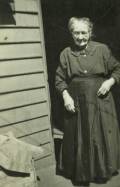
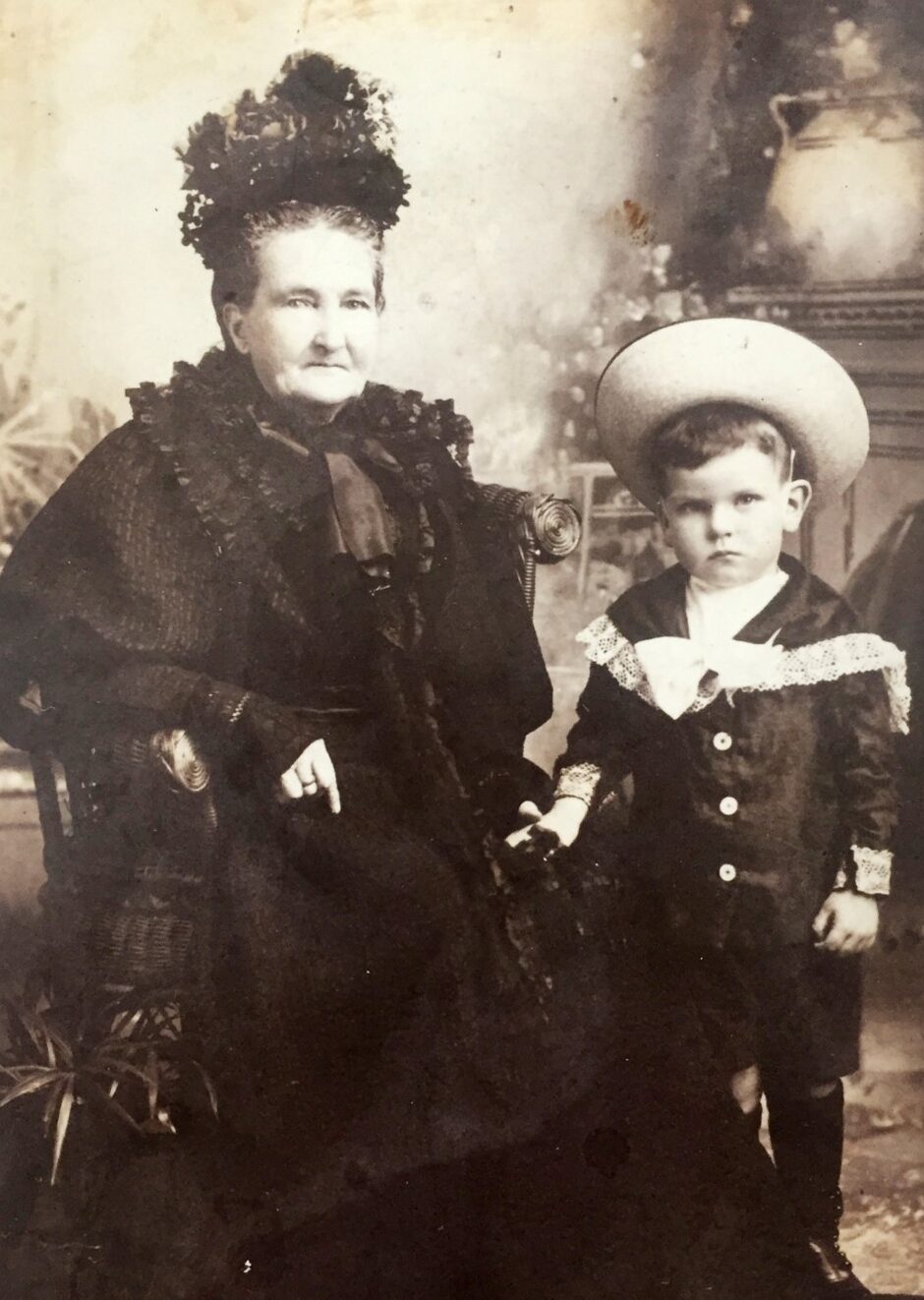
Grandma Shields was brought up in County Tipperary in Ireland during the potato famine of the late 1840s (when she was aged between 5 and 9). Alf said: “I remember her telling me that she had seen people eating grass.”
Alf had very fond memories of her: “She was a marvellous woman.”
Grandma Shields used to read the paper out to Alf and Nell every day, even though she had never gone to school. If she didn’t know a word, she would say “wheelbarrow” in its place. Alf could never understand why she read so fluently, but couldn’t write a single word, not even her own name.

Pernicious anaemia is an auto-immune condition affecting about one in 1,000 people. It was only later in the 1920s that doctors discovered that frequently eating raw liver could alleviate the condition, and research into this led to the discovery of Vitamin B12 in 1948, and that the condition is caused when the body is unable to absorb Vitamin B12 from food. With Vitamin B12 (cobalamin) supplements, sufferers now lead normal lives. A Nobel Prize was awarded to the medical researchers who discovered the cause of pernicious anaemia, and another one to the discoverer of the structure of Vitamin B12.3
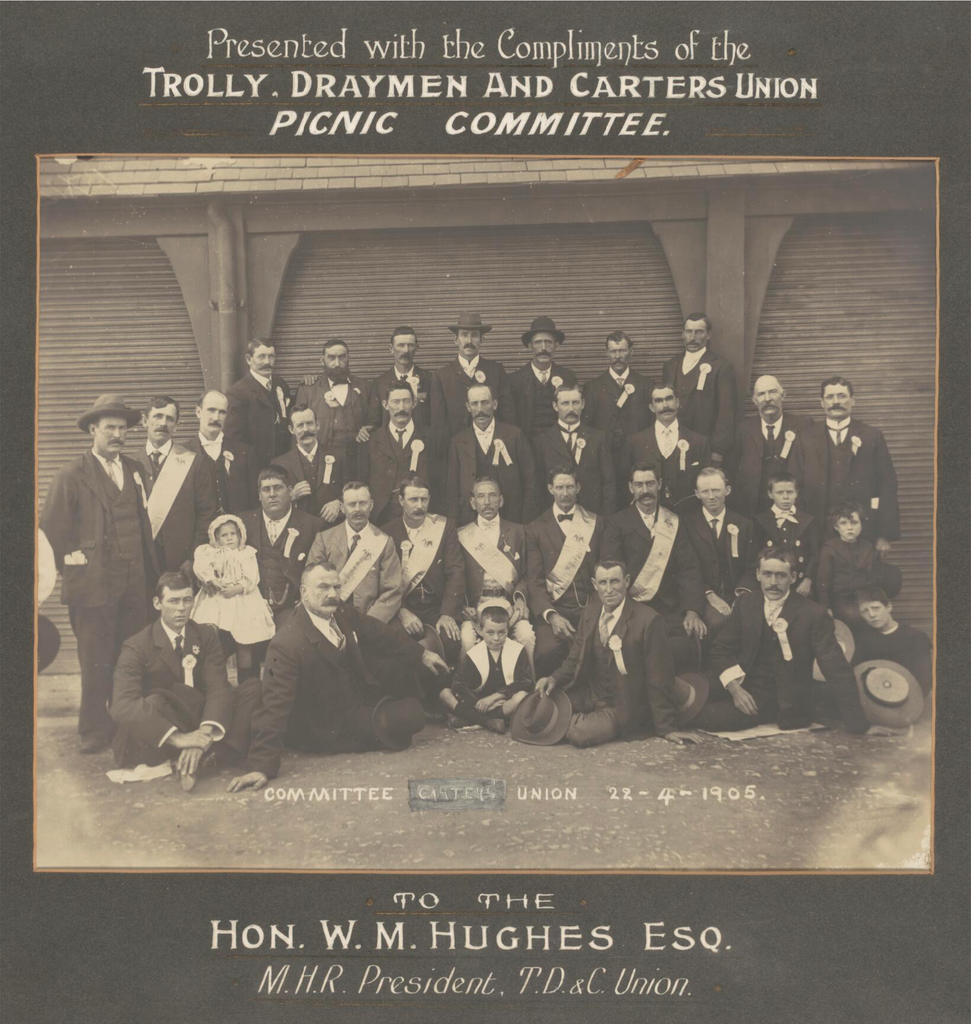
“Father all his life was a good conscientious unionist, and an ardent member of the Trolley & Draymens Union, he was on the committee. We had a big photo, about two feet by two feet, with Billy Hughes, the patron of the Union, in the centre, and around the outer perimeter were headshots of the committee. Father had his watchchain and his go-to-meeting suit on.”2
| 2 | The below somewhat similar image of the Union’s Picnic Committee is at https://nla.gov.au/nla.obj-138394233/view. The Transport Workers Union (NSW branch) started life in 1888 as the Sydney Trolley & Draymen’s Union: see https://twunsw.org.au/about-us/. |

Dot’s letter to her sister Josie Scarra of 15th January 1962 provided the following disapproving assessment of “the children of today”: “We have been very busy at the Fun Parlour for the last month, with a busy fortnight still to come. The money those children and adolescents get through still makes me gasp. And on top of what they are putting in the slot-machines, they are back and forth to the milk-bar next door with “cokes”, sweets, hamburgers, cigarettes and goodness knows what else. And this goes on with the same children day after day.”
Dot’s letter to Josie Scarra of 8th July 1975 referred to an upcoming South Australian State election and says: “for once I can’t make up my mind whom to vote for; I have never voted for Labor but the present Labor Premier, Don Dunstan, seems to be doing such a good job”.
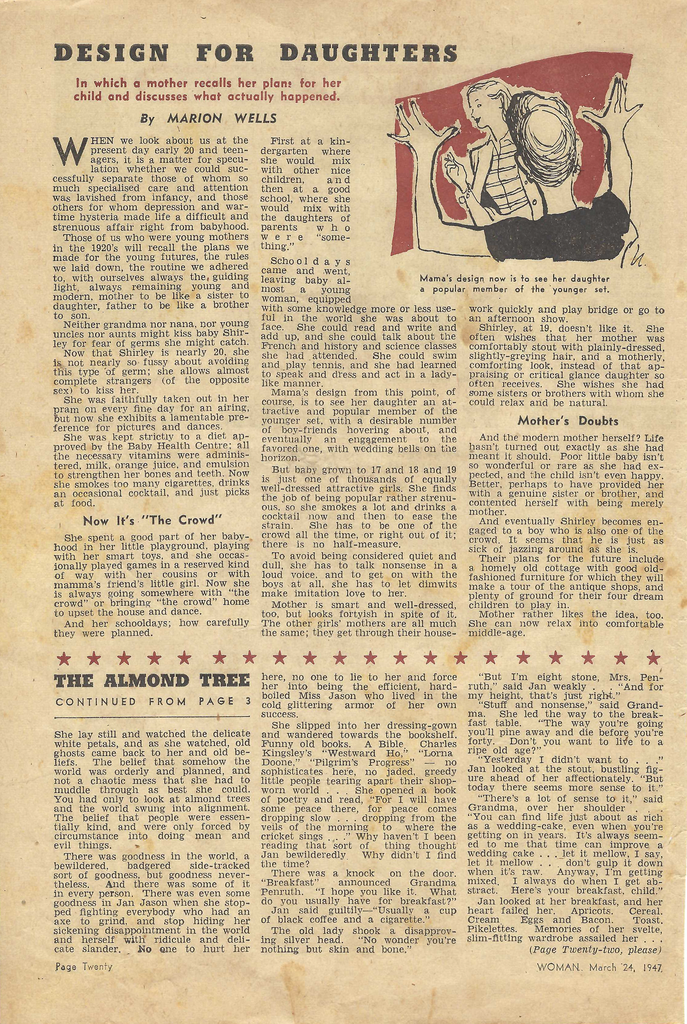
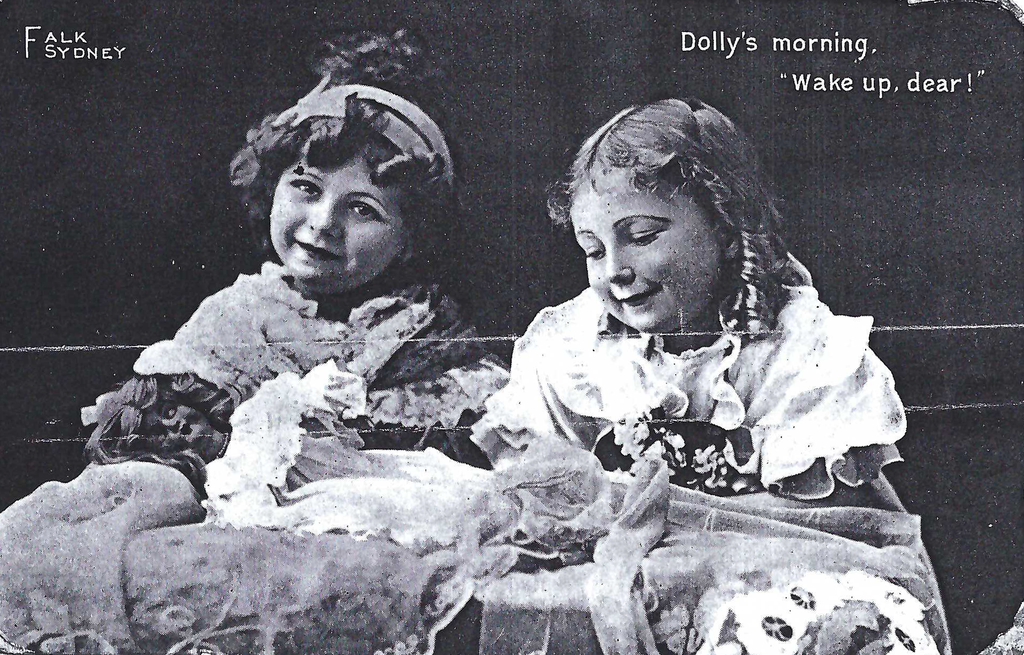
Dot’s articles are pithily written. They are more social commentary than short stories.
Design for daughters (1947) laments the casual behaviour of a modern young woman, something which was never in her mother’s “design” for her. Behaviour such as kissing male strangers, smoking cigarettes, drinking cocktails, “bringing ‘the crowd’ home to upset the house and dance”, and so on. The piece is quite imaginative given that Dot’s own daughters were largely vice free.
The piece also reflects gender norms of the time: the mothers are “all much the same, they get through their housework quickly and play bridge or go to an afternoon show”. The mother’s ultimate “design” is “eventually an engagement to the favored [boyfriend] with wedding bells on the horizon”, and, once that is achieved, mother “can now relax into comfortable middle-age”.
The story shifts focus to a specific mother and daughter and, interestingly, Dot has them breaking with those tropes: “Mother is smart” and, as for the daughter: “To avoid being considered quiet and dull, she has to talk nonsense in a loud voice, and to get on with the boys at all, she has to let dimwits make imitation love to her.”
That pay envelope (1946) goes through how a weekly wage of £6/9/418 must be doled out. As might be expected given the austerity of the post-War reconstruction period in Australia, there is nothing left for discretionary spending: “I do it every week and am usually a penny or threepence on the right side”.
Dot does give her narrator a pat on the back: “I am a wife, and a good manager”. Alf wasn’t a wage earner then, but Dot echoes what would no doubt have been his attitude when she says: “Then 6/– [to him] for liquid refreshment – Social Obligation he calls it.”
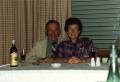
Dressing-gown wives (1948) is a day in the life of a stay-at-home housewife. Stereotypes of the times abound: the husband is untidy, the wife is intent on making sure he is “well-turned out” at work, but insecure at him “admir[ing] the attractive females on the way”, she dreams of him buying her a new pair of slippers, and she “looks fresh and attractive when Bill arrives home”.
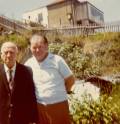
But Bill has “a weary now-don’t-worry-me-with-your-domestic-troubles look on his face”, and they sit through dinner in silence. The piece ends with the wife being optimistic (or Dot possibly means to convey that she is being unrealistic): “But [she] is a woman, adaptable and hopeful, and in spite of Bill’s shortcomings, he is the man she married and she is going to see to it that he mends his ways and makes a career of being a happy husband”.
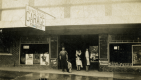
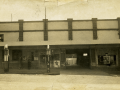
Take my seat, Madam (undated) is an observation of the “comedy of manners” seen daily on the buses and trams given the unwritten rules (since wholly disappeared) as to who should give up their seat to whom. Dot canvasses the various rules, implying that they are actually quite unruly, and so much so that “the cussedness of human nature” guarantees that when one properly thinks he or she need not give up their seat, “they are certain to hear a voice immediately behind them remarking ‘Isn’t it disgusting the way the men grab all the seats these days, and the young girls too – no manners!’”
| 18 | Which converts to $12.93 in decimal currency or, with inflation, $566.17 today. |

Violet Hickling was the 3rd child of Dot’s uncle Albert Edward John Ludlam, known as Jack. The family lived in Coventry. She was killed in the Second World War by a land mine during a German air raid on 8th-9th April 1941. The family history is that she was delivering a baby at the time, and that her younger brother Harold, a member of the Auxiliary Fire Service, dug her, the mother and the baby out of the ruins. Harold’s daughter, Sue Hope, confirmed the story to Kath Palyga in a 2002 letter.
Over 800 of the civilians killed in the Coventry air raids are buried in a mass grave at Coventry’s London Road Cemetery. Violet’s name is listed on the Blitz Memorial there.14
Violet’s mother and youngest sister were both named Florence.
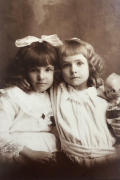
On 11th July 1941, Dot’s father wrote to her:
We received a letter yesterday from little Florrie (England) with some very sad news. In the first “blitz” they were bombed out, and whilst her Mother and Florrie were in Air-Raid Shelters their homes were blown to bits, everything they had was gone. Poor Alf (eldest son) was so badly injured he had to have his leg amputated. And whilst lying in Hospital and Violet’s husband with him, the Hospital got a direct hit and they were pulverised with shattered glass. They had nearly recovered and were home again when Alf’s home was bombed and poor Violet with another woman and her two little girls took refuge in an Air-Raid Shelter when a land mine exploded and blew them all to pieces. Poor Violet’s body was found with the head arms & legs all severed. Just her trunk. It was such a pitiful letter. Uncle Jack & Florrie are inconsolable.
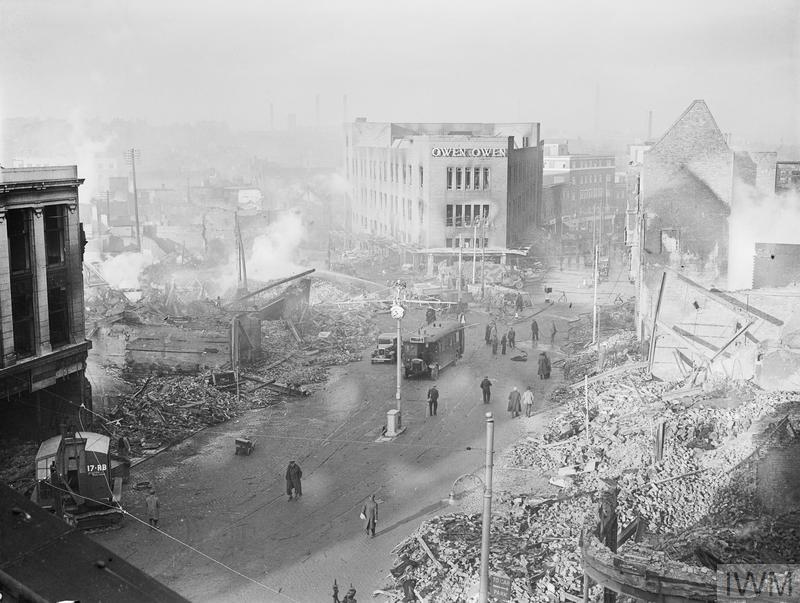
| 14 | See https://www.familyresearcher.co.uk/Blitz-Victims/Index-of-Blitz-Victims-on-War-Memorial-part-1.html. The below image courtesy of https://www.familyresearcher.co.uk/Blitz-Victims/Coventry-Blitz-Victims-detalls-H.html. That webpage also has a short biography of Violet. The land mines used (“luftminen”) by the Luftwaffe were massive 2,200-pound parachute mines filled with high explosives. They were designed to explode on impact and to flatten buildings through sheer concussive force, rather than creating impact craters. Further as to the Coventry bombings, see https://en.wikipedia.org/wiki/Coventry_Blitz. The second image below is of the damage to the centre of Coventry after a raid in November 1940, courtesy of https://www.iwm.org.uk/history/second-world-war/blitz/15-powerful-photos-of-the-blitz, image 6. See also image 13. |
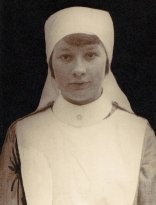
Josie, Barbara and Bette were delivered by Nurse Maud Kerr, a midwife who lived in Woodstock in the house next door to the Shields family, which was also the town’s hospital. Her daughter was Sister Janet Kerr, one of 65 Australian nurses and over 250 civilians evacuated from Singapore on the Vyner Brooke on 12th February 1942, three days before the fall of Malaya.
The Vyner Brooke was bombed by Japanese aircraft and sunk in Bangka Strait two days later. Twenty two nurses who survived the sinking were washed ashore on Bangka Island, where they surrendered to the Japanese, along with twenty five British soldiers.
On 16th February 1942, the group was massacred by the Japanese. The soldiers were bayoneted, and the nurses were ordered to march into the sea where they were machine-gunned. Only Sister Vivian Bullwinkel and two soldiers survived the massacre, and were re-taken as prisoners.12
| 12 | Sister Kerr’s war service records are at https://recordsearch.naa.gov.au/SearchNRetrieve/Interface/ViewImage.aspx?B=4621826. For further information on the Bangka massacre, see https://en.wikipedia.org/wiki/Bangka_Island_massacre and https://www.awm.gov.au/collection/C371606. |