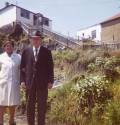
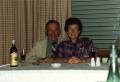
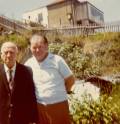
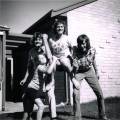
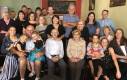
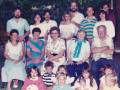
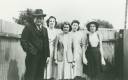
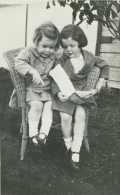
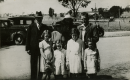
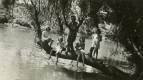
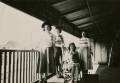
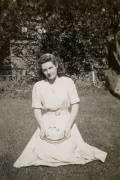
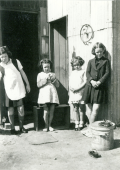
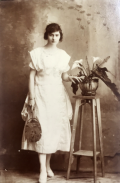
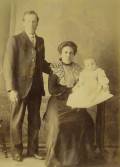
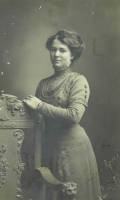
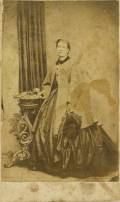
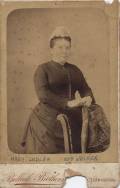
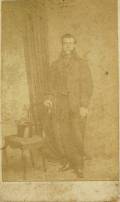
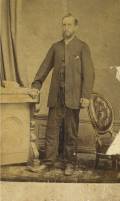
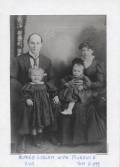
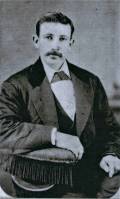
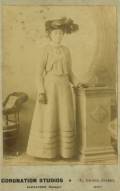
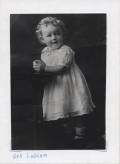
Alfred Charles Shields was born to Hugh and Emily Shields (nee Noblet) on 22nd February 1905 at the Women’s Hospital, Crown Street, Surry Hills in Sydney.
His Early Life
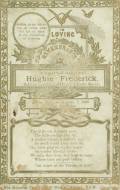
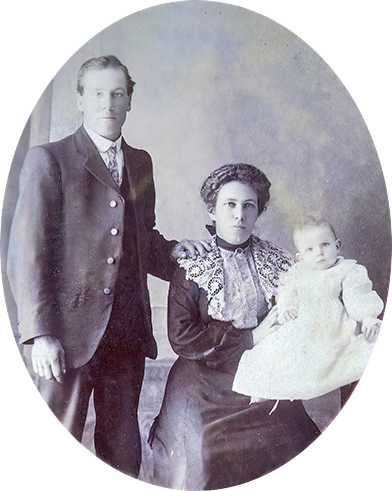
Hugh and Emily’s next child was also called Hugh. He was born on 1st April 1906, but he died 4 months later on 7th August of heart failure and exhaustion with a duration of 30 hours.
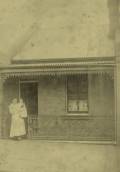
Hugh and Emily then had a daughter Nell, born 8th September 1907. The family lived at 96 Abattoir Road, Balmain (at that time, sometimes given as Rozelle, and sometimes as Balmain South).1 On 8th November 1908, Emily died from pernicious anaemia.
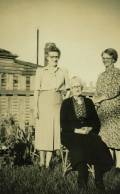
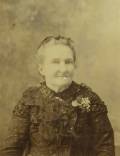
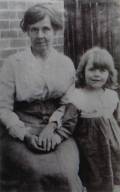
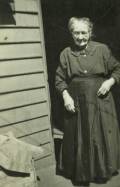
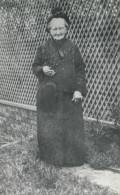
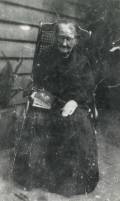
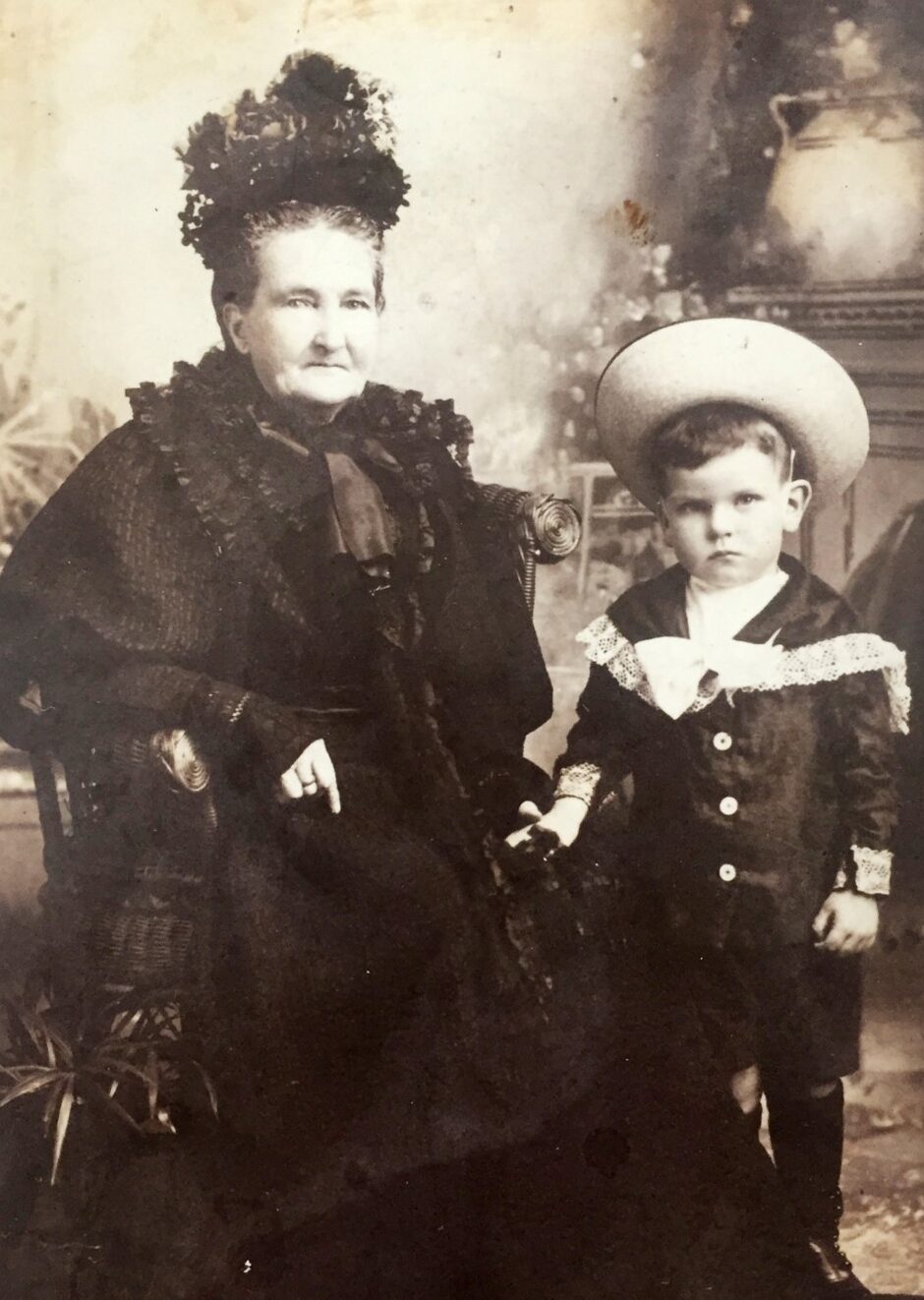
Hugh, Alf and Nell then left Abattoir Road and moved to Mackenzie Street, Rozelle to live with Hugh’s mother Elizabeth Shields, known by all as Grandma Shields. Although she was by now aged in her late 60s, Grandma Shields readily undertook the rearing of the 3 year old Alf, and his younger sibling, the 1 year old Nell.
After about 2 years, they all moved to a house in Hornsey Street, Rozelle, and lived there for the next 15 or so years.
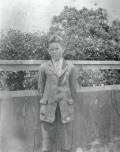
Alf attended St Joseph’s Christian Brothers school for boys in Rozelle. On his first day, he met his lifelong friend, and eventual brother-in-law, Jack Moore.
| 1 | An 1885 Balmain Street map shows Abattoir Road. It is now gone, although parts of it are traversed by present-day Lilyfield Road. Hornsey Street, where Hugh later took his family to live, still exists. In the 1885 map, Hornsey Street is parallel to, and immediately north of, Abattoir Road, see https://dictionaryofsydney.org/media/3894. The whole southernmost part of the suburb shown on the 1885 map as Balmain is now modern-day Rozelle. |
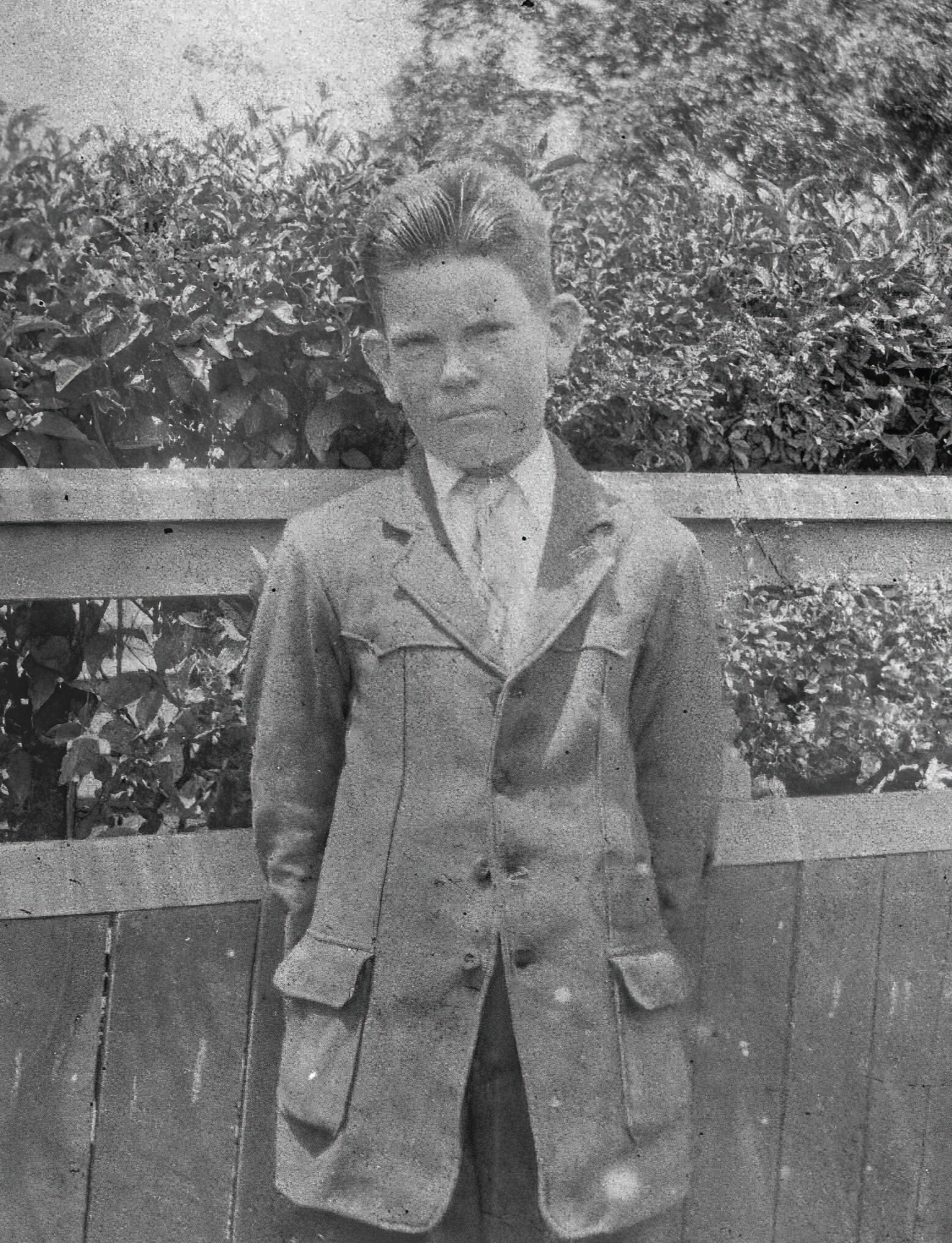
Alf & the War
Alf remembered the Great War: the casualty lists in the papers, the two conscription referendums, and how they changed the name of fritz to Sydney Sausage.
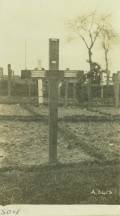
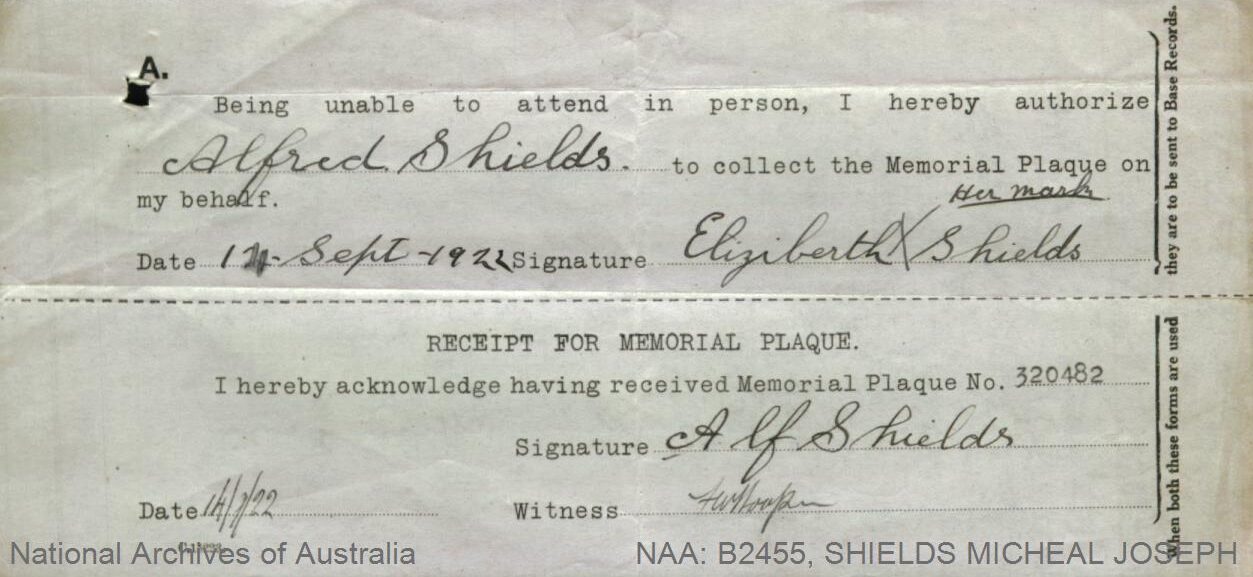
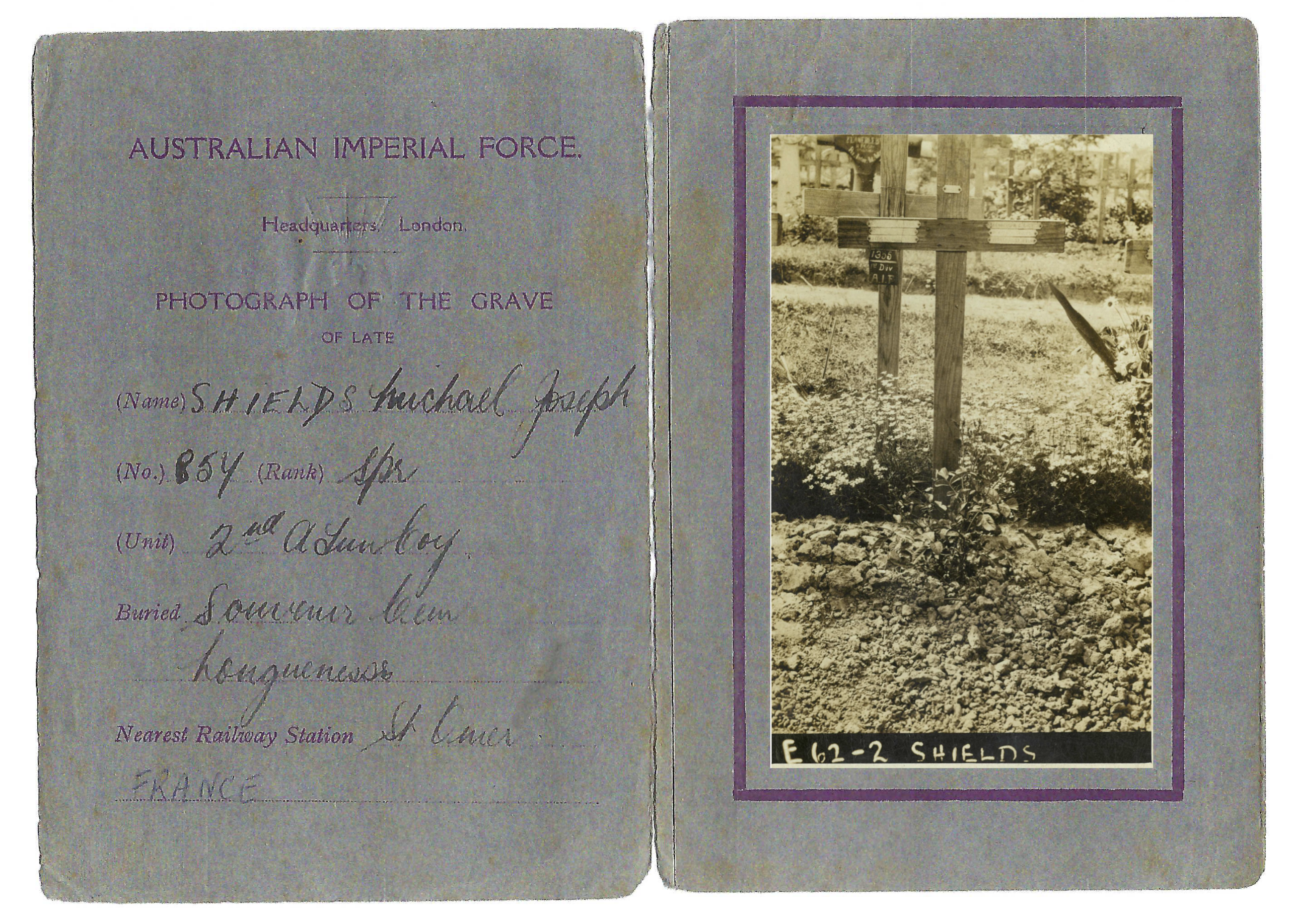
Alf lost his uncle, Michael Shields, in the war. In September 1922, Grandma Shields sent a 17 year-old Alf to collect a memorial plaque for her son, known as, Mick, who had died on active service on the Western Front on 24th August 1916.
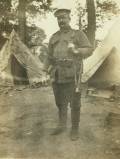
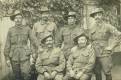
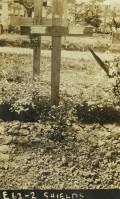
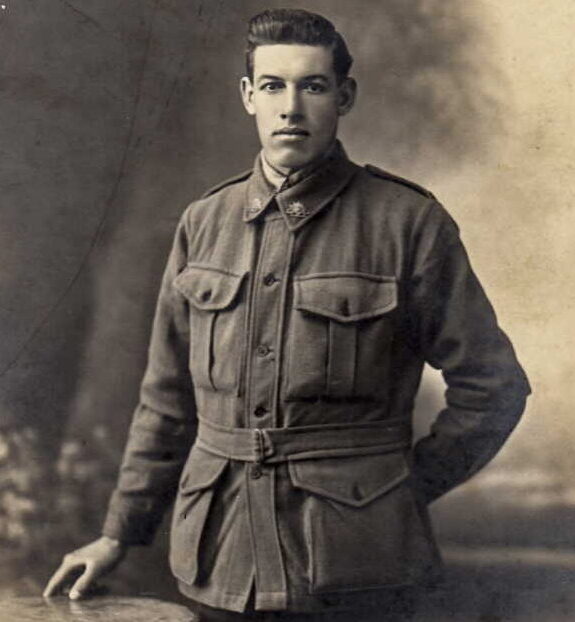
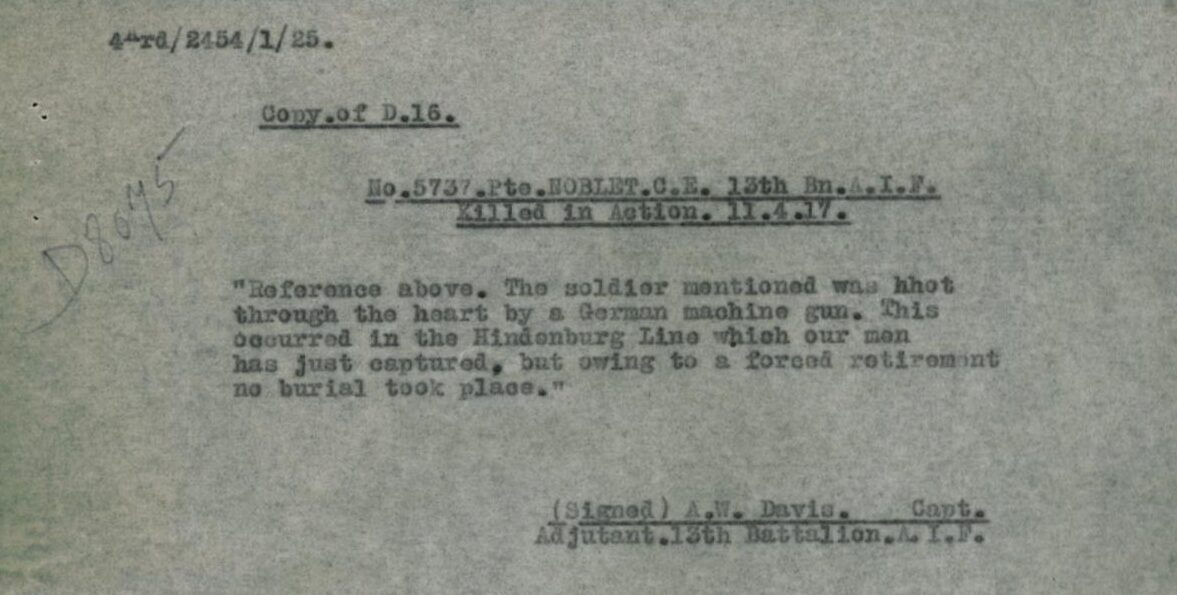
Alf also lost another uncle in the Great War, his mother’s stepbrother Charles Emil Noblet. Charlie was with the 13th Battalion, Australian Imperial Force, when he was “Killed in action In The Field” at the Battle of Bullecourt on the Western Front on 11th April 1917, having just turned 21.
Alf remembers his father Hugh telling him that Charlie’s father, Grandpa Noblet, had told Hugh that when he signed the enlistment papers, he had signed Charlie’s death warrant.
Alf recounted: “One of the things [Grandpa Noblet] used to say was ‘France will lose all her lads’, because I suppose he still had memories of the Prussian War when Germany cost France a lot of young lives.”
Then Alf recounts the end of the war:
“I remember coming out of school one afternoon and down the road came cars with kerosene tins tied behind them and horns going and things like that and I said, “what’s that?” and a kid said, “the war’s over”.
Soon after that, the [Spanish] flu epidemic swept through the world and killed more people than the total war casualties, and they closed all the schools.”
His Teen Years
About 1917, Kate Dwyer, then aged about 27, came to live with the family. Catherine Dwyer was one of three daughters of Grandma Shields’ child by her first marriage, Elizabeth Bolan. She was Alf’s Aunt Lizzie, who married Patrick Dwyer. None of their daughters, including Kate, ever married.
In Rozelle, Alf was living next door to John Stewart & Son, Motor Importers, a company which assembled cars and trucks as agents for manufacturers such as Columbia, Alsace, White, British Burner, English Vulcan and Rochet-Schneider. These arrived in huge crates with their wheels off, windscreens and hoods down, and bolted to the floor of the crates.
One of the mechanics who worked there had a 4-cylinder Henderson motorcycle with a sidecar. He would let Alf ride it around the yard, but Alf soon progressed to being sent out on it on messages.
Alf said that the places he was sent might only be ½ a mile away, but he managed to run up a fair bit of mileage. He was 13 years old.
On Alf’s 14th birthday in February 1919, he left school and got his first job for 10 shillings a week at a foundry, Tulloch’s Phoenix Iron Works in Rhodes, but he only lasted a fortnight. He then had jobs as a tinsmith, and a blacksmith’s striker.
He had learnt to drive by the time he got his next job with Peters Ice Cream as a delivery driver’s offsider. Alf says he often ended up making the shop deliveries on his own while the driver drank in the pub.
Alf spent a year or so with Thomas McPherson & Sons at the engineering supplies counter. He said it “was a good job. That’s where I got the basics of all the various engineering bits and pieces – nuts, bolts, cotter pins, and things of that nature. I eventually threw up that job, at 35 shillings a week, to go and take eleven and ninepence a week to become an apprentice motor mechanic. I was always determined I’d have a trade, as my father only drove horses around Sydney.”
Alf was apprenticed at John Stewart & Son. He takes up the story, including how he got involved in motorcycling.
In 2006, Alf’s daughter Bette recounted received family history that, “at 15, Dad rode as a sidecar competitor at the old Victoria Park track. At 17 he competed at Penrith, the Showgrounds Speedway Royal, and at Maroubra on his own motor bike.”
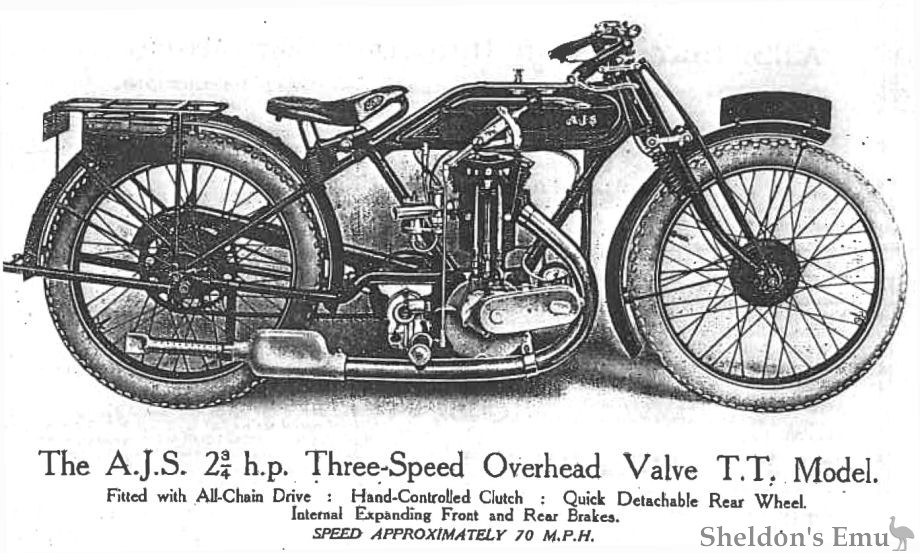
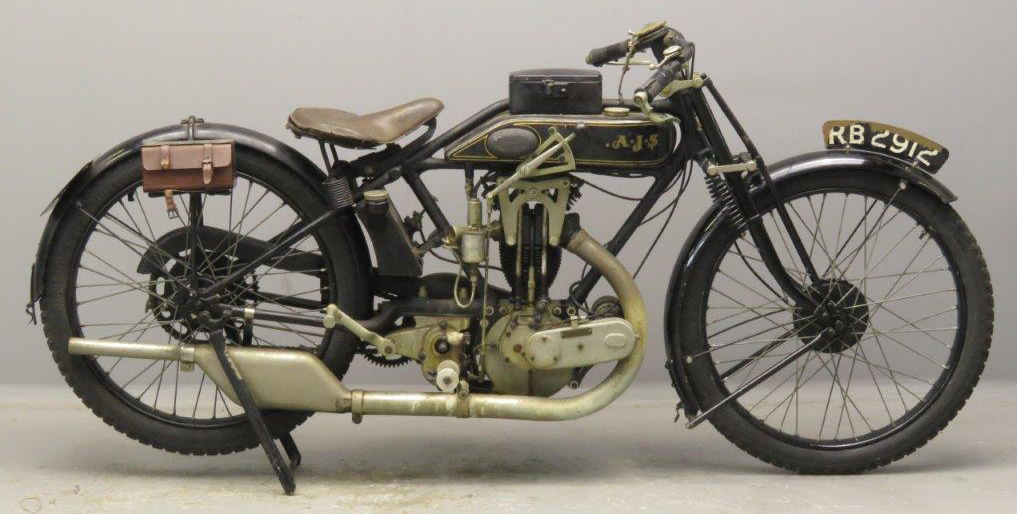
Alf himself records that, at this time, he won various prizes motorcycle racing – not just money and medals, but also a shaving set including mug, bowl, brush and mirror. He raced a 1925 350cc overhead valve A.J.S. E6.
Alf’s Working Life
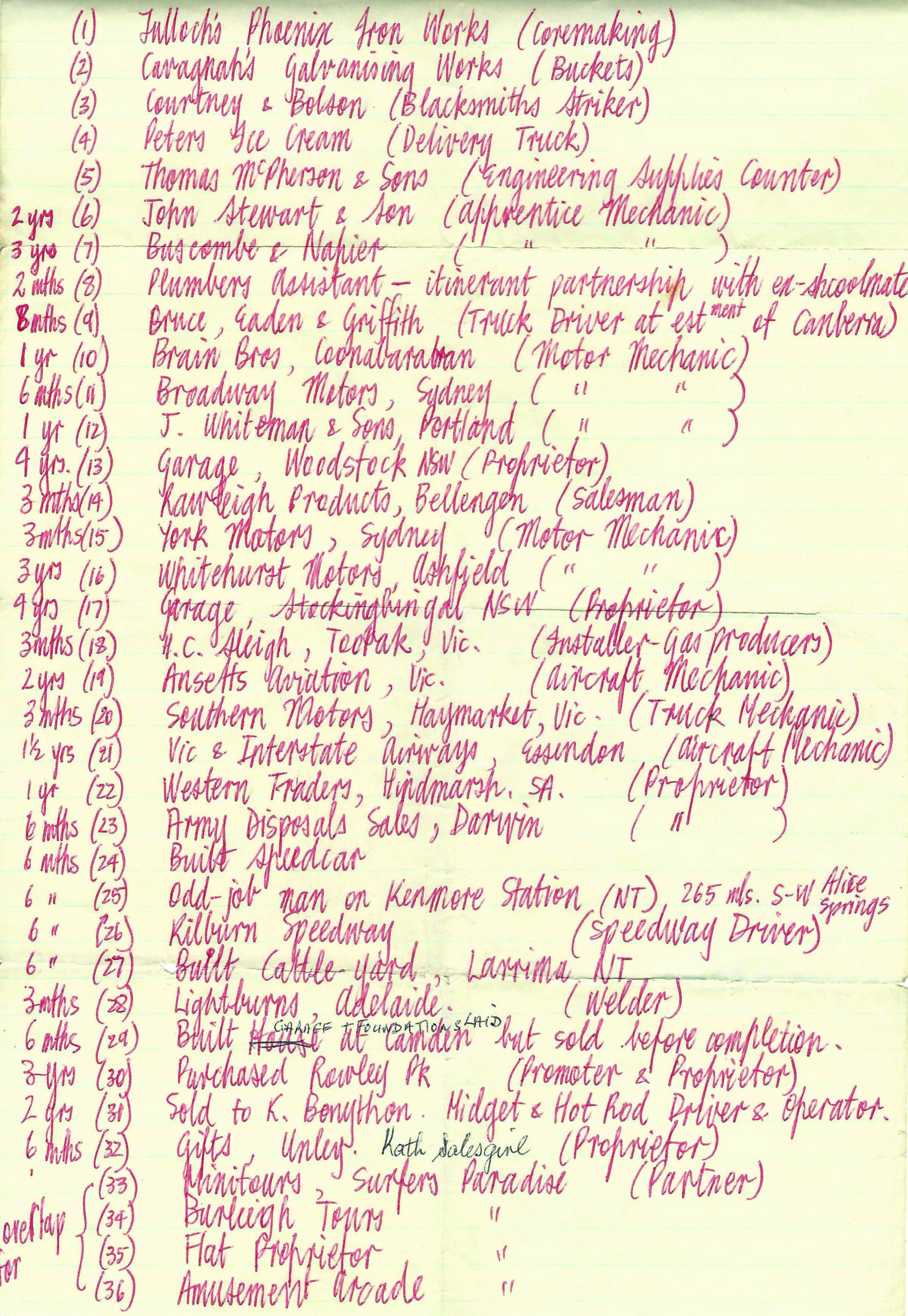
Alf often spoke of how many jobs, occupations and businesses he had had. He sat down with his grandson Steve Palyga in the 1970s and they made a list.
Grandma Shields died in 1925, and the family moved to a flat over the Astor Café in Anzac Parade, Kensington.
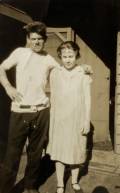
Jack and Nell Moore’s son Tom Moore recorded that, in the mid-twenties, his father and Alf spent several years as itinerant labourers in country New South Wales. Alf himself recalled that, early in 1927, he and Jack left Sydney on a 1924 A.J.S. with sidecar to work in Canberra. They lived in a tent, and worked on the building of the new suburb of Ainslie. Tom Moore says that “Alf was employed as a truck driver and there is a photo of him standing bare chested beside a load of bricks, which seemingly had to be loaded and unloaded by hand”.
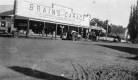
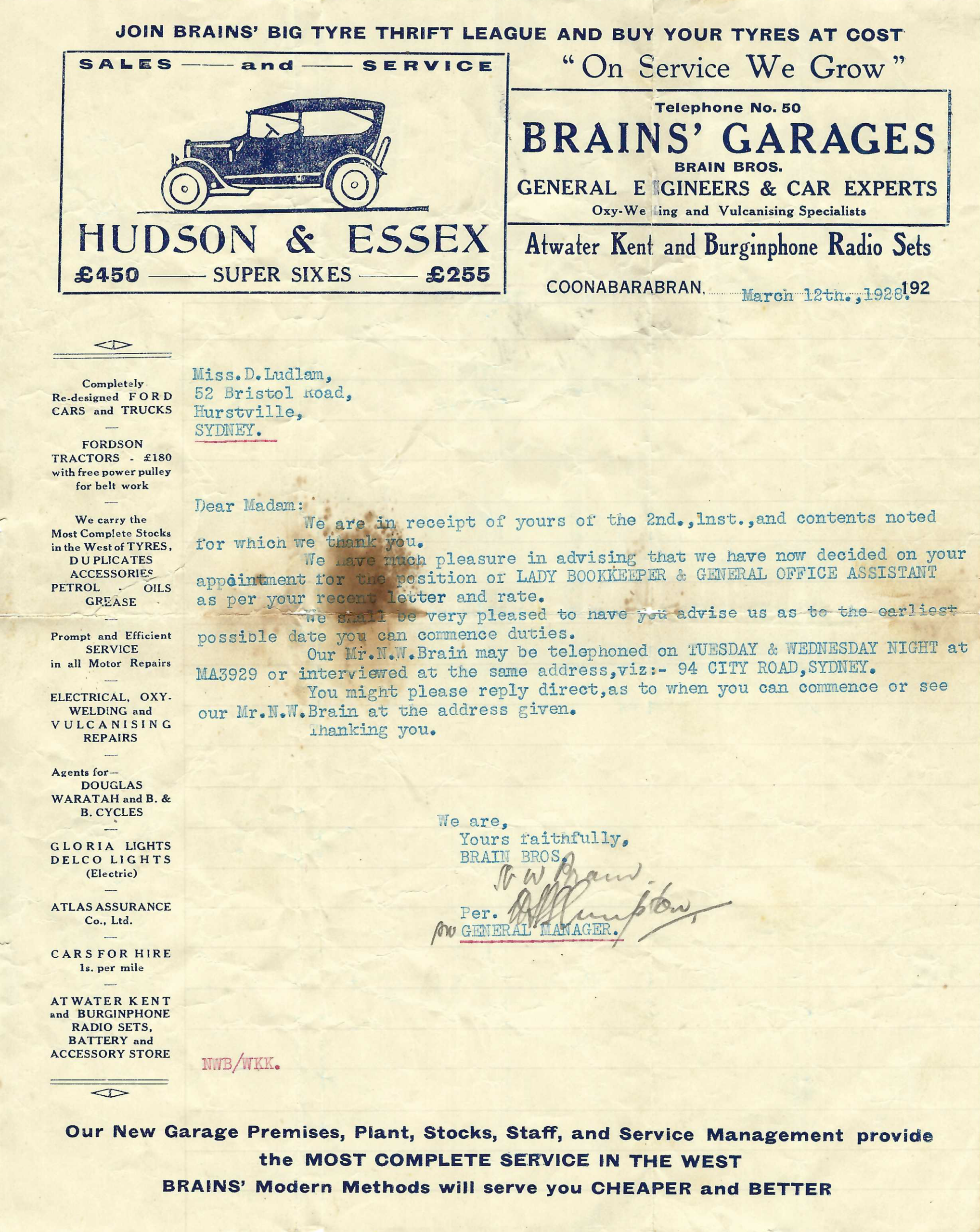
Alf himself recalled that he and Jack attended the opening of Parliament House, where Dame Nellie Melba sang. The building was opened by the Duke of York, later King George VI, on 9th May 1927.16 Alf subsequently took up a position as a mechanic at Brain Brothers Garage in Coonabarabran, some 300 miles by road north-west of Sydney.
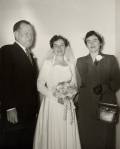
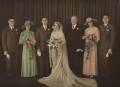
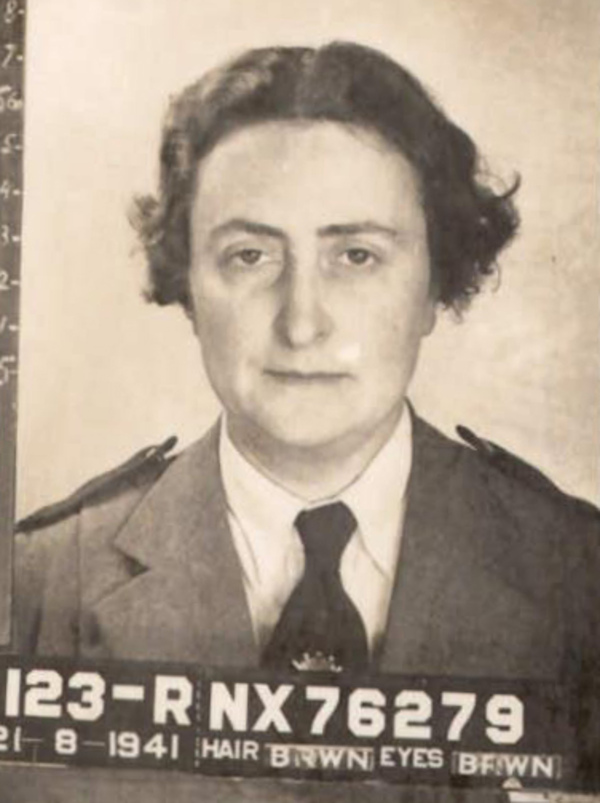
Apparently he arrived there not long after Dot, who had moved there to take up the position of the garage’s “Lady Bookkeeper” in early 1928. The two became a couple, and married in Sydney the following year on 17th August at St Mary’s Cathedral.
The couple moved to Portland (near Lithgow), where Alf got employment as a mechanic. Whilst living there, Alf and Dot had their first child, Kathleen, on 1st December 1929. For most of their lives, Alf and Dot backdated their wedding to 1928 to protect Kath. Kath found out decades later, when such things mattered no longer. When questioned, Alf reflected wistfully: “We jumped in the cot too soon”.
In 1930, with the onset of the Great Depression, Alf got the sack from the garage in Portland. He heard of an empty garage, and the need for a motor mechanic, in Woodstock, a rural town west of Bathurst. Alf and Dot arranged to rent the garage for £1 a week, and Alf borrowed £50 from his father Hugh, and used it to buy his own tools. He had those spanners all his life.
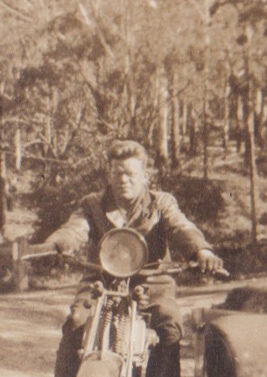
Unfortunately, the garage’s house was not immediately available, being occupied by one Paddy Flynn, his wife and six children. So Alf and Dot lived in a curtained off corner of the garage, and with a kero primus for cooking, boiling water to wash baby Kathleen’s nappies, and so on. Alf: “Times were tough, but you made do.”
During this period, Alf was understandably not involved in Speedway, however, he bought, reconditioned and sold a few motorcycles. He also converted the first car he had owned, “Old Dusty”, to a utility, and sold it for about £25.
Three more girls, Josie, Barbara and Bette, were born in Woodstock in quick succession.
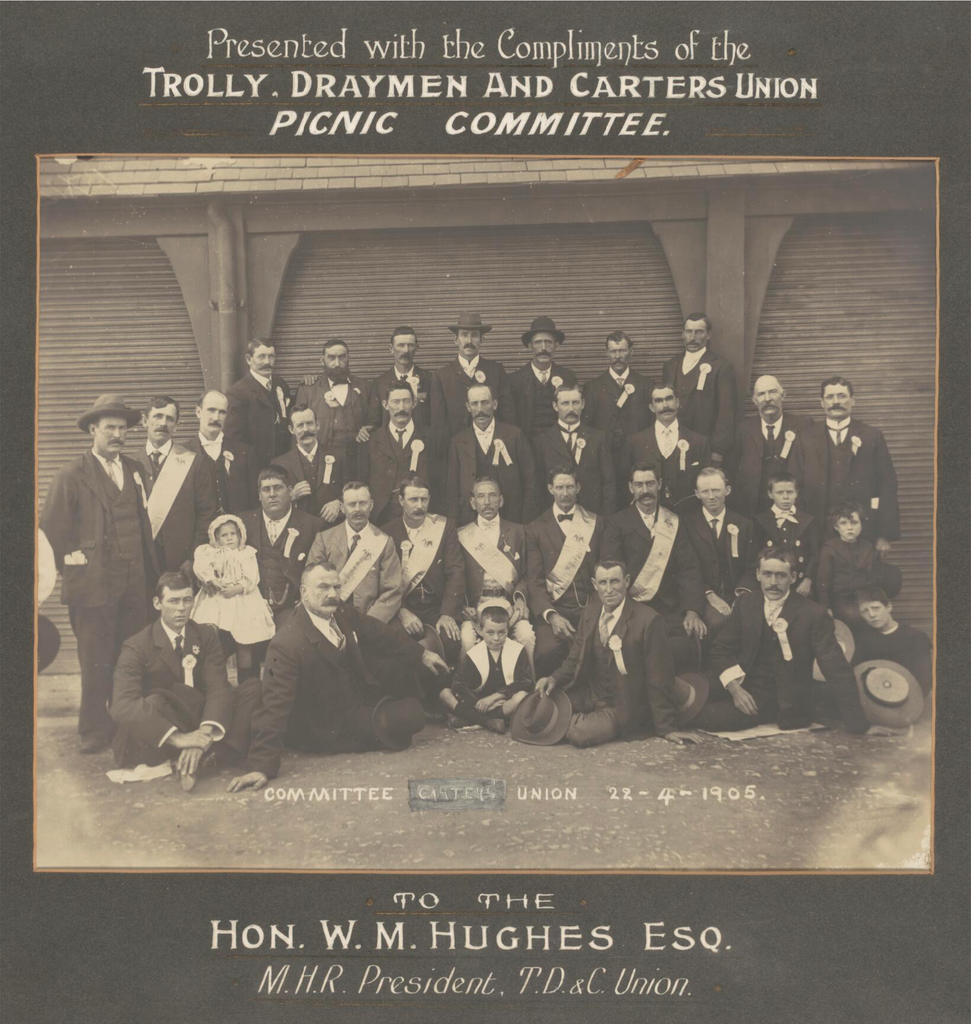
Alf’s father Hugh came to live with the family in Woodstock after he, too, lost his job (as a carter) in the Depression.
In 1934, as the Depression started to lift, Alf and Dot sold the garage. They moved to Bellingen in northern New South Wales, where Alf became a “Rawleigh’s Man”,18 a travelling salesman selling oitments, medicines and homeware. This was not a success, so the family moved to Sydney, and Alf worked as a motor mechanic at York Motors in Sydney, and then at a garage in Ashfield.
In Sydney, Alf re-engaged with speedway. Of this period, his daughter Bette remembered in 2006: “From the beginning of our lives it was always speedway as dad lived and breathed his passion for motor sport. [Alf’s older daughters] Kath and Josie remember sitting on “the mound” at the Sydney track.”
In 1936, Alf was part of a syndicate that built a midget race car for a Sydney driver, Jack Rochester. The following year, Alf built, and raced, his own midget. “Midget” racing originated in the United States in 1933.19 It came to Sydney in October 1935.20 Midgets are intended for short races, and were ideal for the existing oval speedway tracks.
Moving around
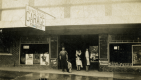
In August 1938 the family moved to Stockinbingal in Central West NSW, where Alf had a garage and operated a picture theatre on Saturday night, and Dot ran a cafe/deli.
Alf often told the story that “the day the Japs bombed Darwin,21 I decided to be in it, and to use my mechanical know-how in the war effort”.
So Alf and Dot sold up their interests in Stockinbingal, auctioned all their stock and furniture, and went to Melbourne to find accommodation, and for Alf to report to Manpower.22 The children stayed in boarding school at Stockinbingal until the May school holidays, when they followed to Melbourne.
Manpower placed Alf at Essendon Airport, where he was a ground engineer engaged in engine installation and testing on trainer aircraft.
Dot had a shop in St Kilda at the time. Whether or not this was also the newsagency which Alf also claimed as one of his businesses, there is no doubt she would have been far more involved in these “sidelines” than Alf. Alf continues the story of a move to Adelaide, working in the Northern Territory, and re-engaging with speedway.
| 21 | On 19th February 1942, see https://en.wikipedia.org/wiki/Bombing_of_Darwin. There is a record that Alf and Dot’s Stockinbingal sell-up sale was on 31st January 1942, so the reason for departing may have been confabulated by Alf. In any event, he did join the war effort in Melbourne. |
| 22 | See https://en.wikipedia.org/wiki/Manpower_Directorate_(Australia). |
The Speedway
In 1949, Alf probably got the taste for speedway promotion when he agitated for the formation of a racing drivers association in Broken Hill,25 and organised a speedway meeting at its Western Oval on the King’s Birthday weekend.26
Also at about this time, a group of drivers were disenchanted with Kilburn Speedway’s new promoters from Melbourne and wished to set up a new speedway.
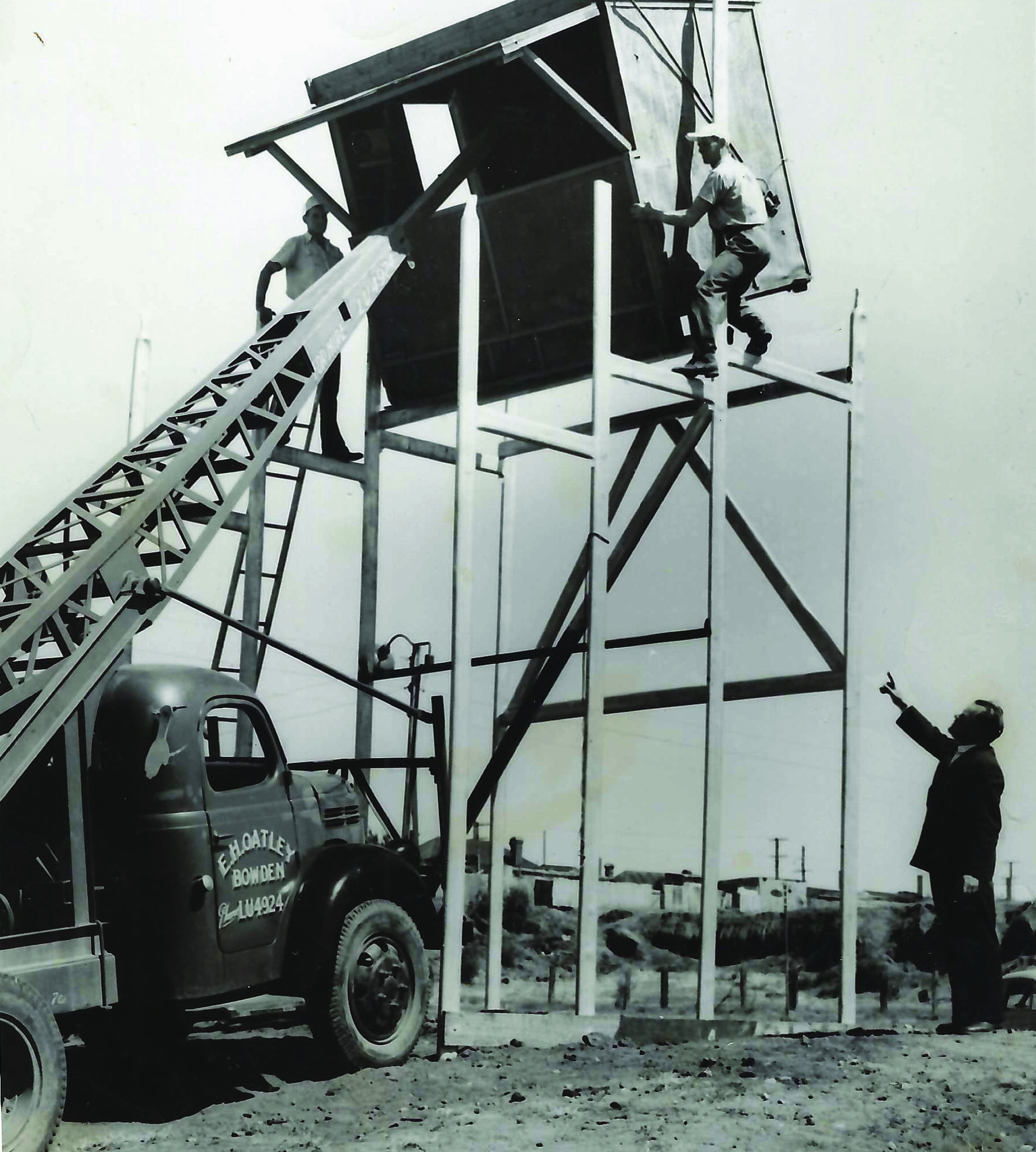
The South Australian Soccer Association owned a 10-acre pughole (a worked out clay pit used for making bricks) at Torrens Road, Brompton, known as Rowley Park, but encountered problems attempting to grow turf in it for a soccer pitch. They decided to lease it out, initially as a greyhound racing track.27
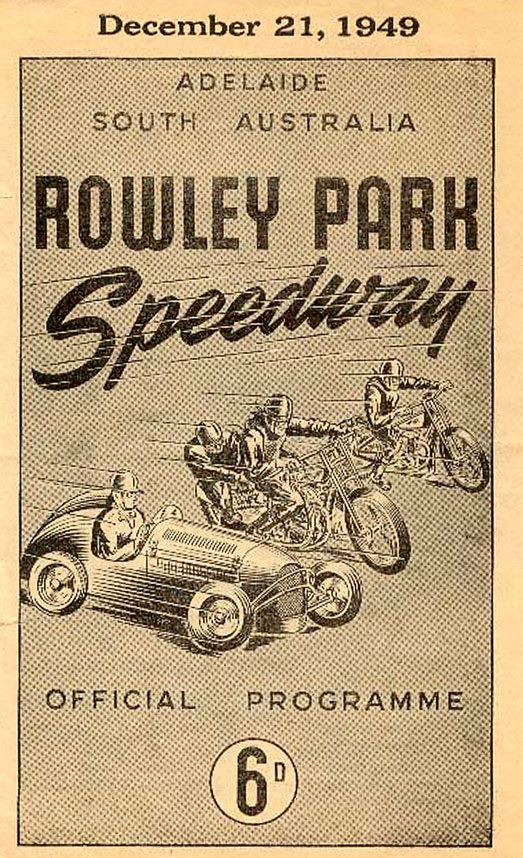
Then, in 1949, they agreed to lease it out for a speedway. Rowley Park Speedway Co. was formed as the promoter,28 and its first race meeting was held on 21st December 1949.29
| 25 | See https://trove.nla.gov.au/newspaper/article/140893124. |
| 26 | See https://trove.nla.gov.au/newspaper/article/140898620. |
| 27 | From at least 1946, see https://trove.nla.gov.au/newspaper/article/35766067. |
| 28 | See page 2 at https://nla.gov.au/nla.obj-852161726. |
| 29 | See https://trove.nla.gov.au/newspaper/article/35784530 |
Alf recorded that the venture struggled, with a paid average of just 1,100 customers a meeting, and that, half-way into their second season, the promoter had had enough. So Alf decided to have a crack, and the following season, he and Dot were in the speedway business.
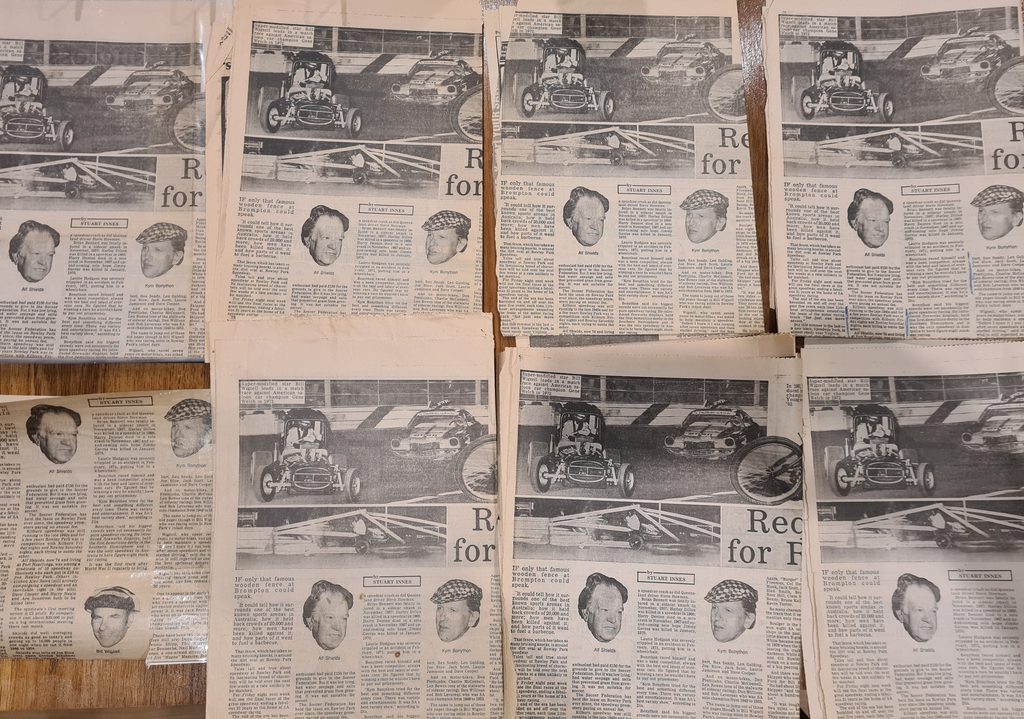
Alf said the crashes at the speedway were spectacular, as his collection of action photos verified. There were no roll cages then, and Alf said it was a wonder no one was killed during his time.
Alf’s daughter Bette Dunsmore takes up the story of the operations of Rowley Park.
Speedway at this time consisted of solos (motorbikes), sidecars, and midgets. Sprintcars, with their large top wings and V8 engines, hot rods, stock cars and demolition derbies all came later. With nimble team work, about 23 events could be run per night.
Driver Sel Harley wrote in The History of Rowley Park Speedway (ed. Phil Herreen): “Nicknamed “Peanuts” – for his tight monetary control – nevertheless Shields improved Rowley and it grew in public acceptance and awareness during Alf’s time.”
As interest increased, new speedcars were built, and bought, and interstate competitors such as Jack Brabham were easier to attract or pay for (his appearance fee was £35), all of which in turn increased interest further.
According to the 1963 Gold Coast Bulletin article, spectator numbers climbed from 1,150 per meeting to 3,500, then 9,000, and even to 14,000 when Alf brought in Frank “Satan” Brewer to race.32 Alf took out billboards, sought to get newspaper and radio coverage for upcoming speedway meetings, and talked up the sport whenever he could. Alf loved promotion (and self-promotion even more), and was a natural at it.
An ABC radio programme broadcast a series of segments on Rowley Park in the 1980s, and Alf was interviewed for it. Alf was asked, “Why would people come to Rowley Park?”. He answered: “The main one goes down there to see smashes and crashes, blood and guts. As well as sheer racing, there is a few who go there for the pure racing of it.”
Whilst operating Rowley Park, Alf was sued by a handful of nearby residents, who claimed that the speedway was a nuisance due to noise, dust and fumes.
The case went to trial, and was reported in the official South Australian legal casebooks.33 Alf always considered he won the case, although the judge did declare that the noise of the amplifiers and the racing was an actionable nuisance at the time the Writ was issued. The judge ordered Alf to pay the plaintiffs’ costs until the case was listed for trial, and each side had to pay their own costs of preparing for trial and the hearing, which would be by far the most of the costs.
Alf was always miffed that the typewritten copy of the judgment named the defendants as the Soccer Association and “another”. “I bloody-well defended the case, and paid over £1,000 to do so, and I wasn’t even named as a party!”
After the 1952-1953 season, as Alf told the Gold Coast Bulletin in 1963, he “took off on a world tour that clocked 28,000 air miles in four months, and covered 40 speedways in U.S.A., England and the Continent”. A highlight of the trip was “an invitation to Indianapolis Speedway” where “Alf received red carpet treatment and V.I.O. courtesy”.34 He told the Bristol Evening Post that he had visited seven British speedways in the preceding ten days.
After 3 years, at the end of the 1953-1954 season, Alf’s Rowley Park lease came up for tender, and he lost it. He always said he regretted not putting a right of first refusal in his original lease.
| 33 | Field and Others v South Australian Soccer Association (Incorporated) and Shields [1953] SASR 224. |
| 34 | VIO is probably a typo for VIP, which is undoubtedly what is meant in any case. |
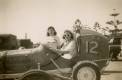
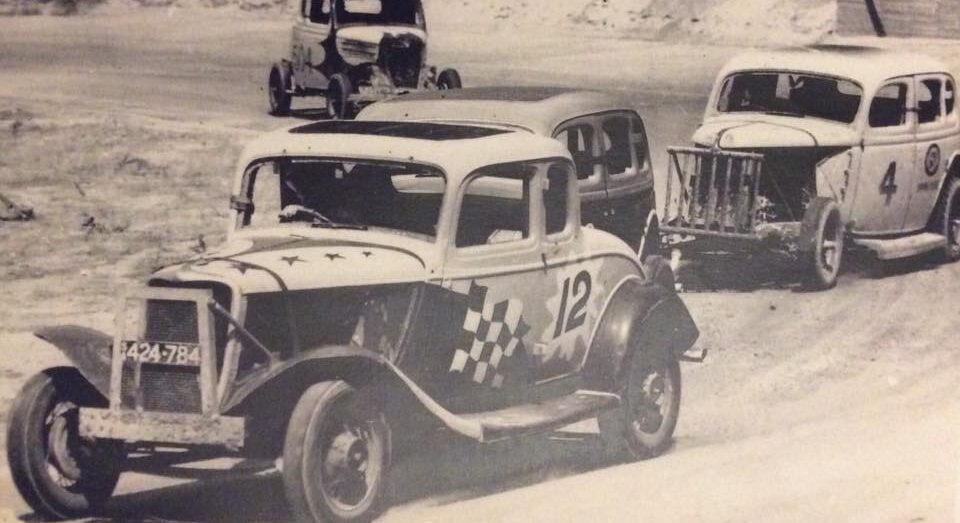
Alf also said that, at this time “during the winter lay-off, Bill Evans started Skyline Speedway at Heathfield in the Adelaide Hills,38 with a new class of cars, Hot Rods. I built my Number 12 Hot Rod, a 1934 Ford Coupe with a later model Ford Mercury V8 engine fitted. It was very competitive, and I came second in the very first 20-lap Australian Hot Rod Championship.39”
| 38 | See http://www.speedwayandroadracehistory.com/adelaide-skyline-motordrome.html. |
| 39 | See, further, https://oldtimespeedway.homesteadcloud.com/stories/remembering-adelaide-s-skyline-motordrome. The article confirms that Alf came second in the 20-lap Australian Stock Car Championship at the Easter, 1955 meeting. |
Alf’s Later Life
Alf told the next phase of his story to the Gold Coast Bulletin in 1963. In 1956, the Gold Coast Bulletin reported that Alf “had set himself a target – to become the oldest competing speedcar driver in Australia – and at the age of 51½ he had established that record. … Today Alf Shields classifies himself as a sober-minded 52 year old businessman, with roaring motors and broadsiding corners all behind him. He said on Tuesday: “In a lifetime on the speedway track I was never hospitalised. I was paid for taking risks on the speedway circuits, but there the traffic was all one-way, and any risks taken were calculated ones”.”
In about 1962, Alf and Dot established the “Fun For All” amusement arcade at Burleigh Heads complete with pinball machines, jukebox, a mini bowling alley and a shooting gallery. Alf continued with the mini-bus tours whilst Dot ran the fun parlour.
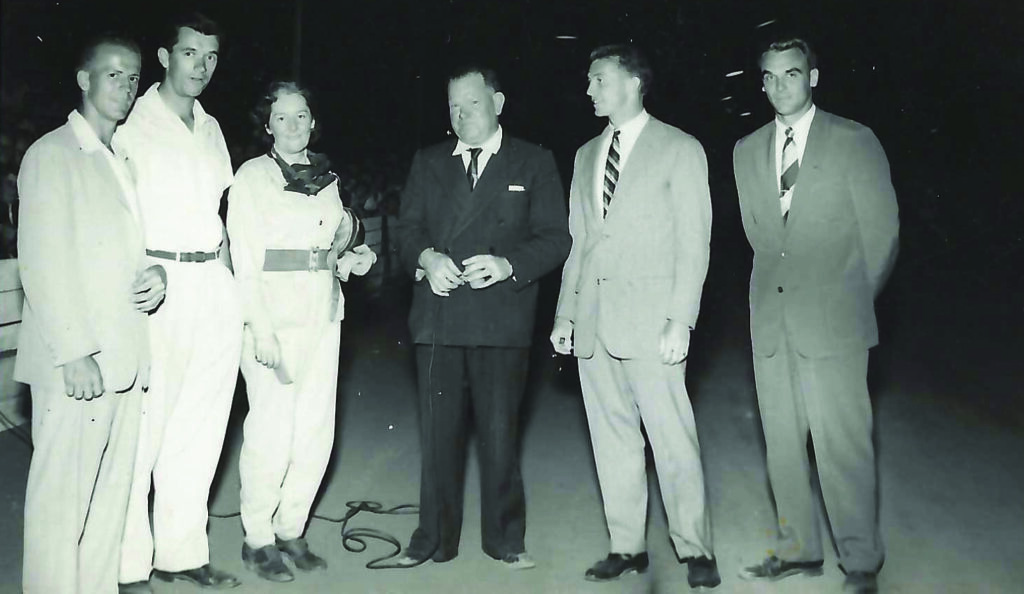
In 1973, when Alf was 69, he and Dot moved back to South Australia. Alf continued to go to speedway meetings at Rowley Park, and after it closed in 1979, Speedway Park at Virginia,41 always as an esteemed guest in the VIP viewing room, and often invited to present trophies.
Alf was incredibly phlegmatic when he was diagnosed with cancer in 1990. He declined chemo, and decided to do some “last hurrah” things. He heard of a 3-day speedway meet over the January 1991 Australia Day long weekend in Mildura, and asked his grandson Steve Palyga to go, as it would be a great final opportunity for him to catch up with his granddaughter Trish and her kids as well.
Alf and Steve had the best weekend, watching the speedway each night, and then partying on afterwards at the track to the small hours.
Alf said “I’ve had the best life, I’ve done whatever I wanted to, I had the 4 best daughters you could want, and great times with my grandkids. I’ve been the luckiest guy ever, so don ’t mourn for me when this gets me.”
He wrote a letter of thanks to the Mildura speedway publicity officer afterwards:
“Thank you for the V.I.P. treatment and hospitality, the Saturday night club night, all my idea of Heaven – full of Speedway guys and girls, talking about the real things in life – SPEEDWAY!
It was a wonderful weekend. No T.V. news, and I only looked at the paper to see what time the skids began.”
Alf died on 20th April 1991 at O’Halloran Hill, where his daughter Bette had been providing palliative care for him. (Bette received an OAM in 1992 for “service to nursing, particularly hospice and palliative care”).42
Afterwards, the Racing Drivers Association of South Australia published tributes in its newsletter. Trevor Putterill said he had spoken to him two weeks prior to his death, and Alf “in his usual, philosophical way, stated that he had no regrets, he had achieved everything he ever wanted out of life, and if he missed something then it wasn’t worthwhile anyway! According to Alf, there are only two beers – a good beer and a better beer!” Ron Smith said Alf was “a gentleman, a man who lived and breathed speedway – a person who was responsible for giving new life to the declining speedways in South Australia of the 50’s.”
In his book Family Ties, Alf’s nephew Tom Moore summed the man up, “More so than others in the family, Alf was a risk taker and a gregarious, outgoing businessman with a strong dose of self-esteem and self-promotion. He combined these skills with passions, such as that for motorsports, and opportunities as they arose. These attributes came together in a remarkably diverse, well-travelled, and adventure-filled life.”